House in the woods
Seeking to connect its inhabitants with nature all year around, a new house informed by Japanese architecture and the work of Frank Lloyd Wright already feels embedded into its environment.
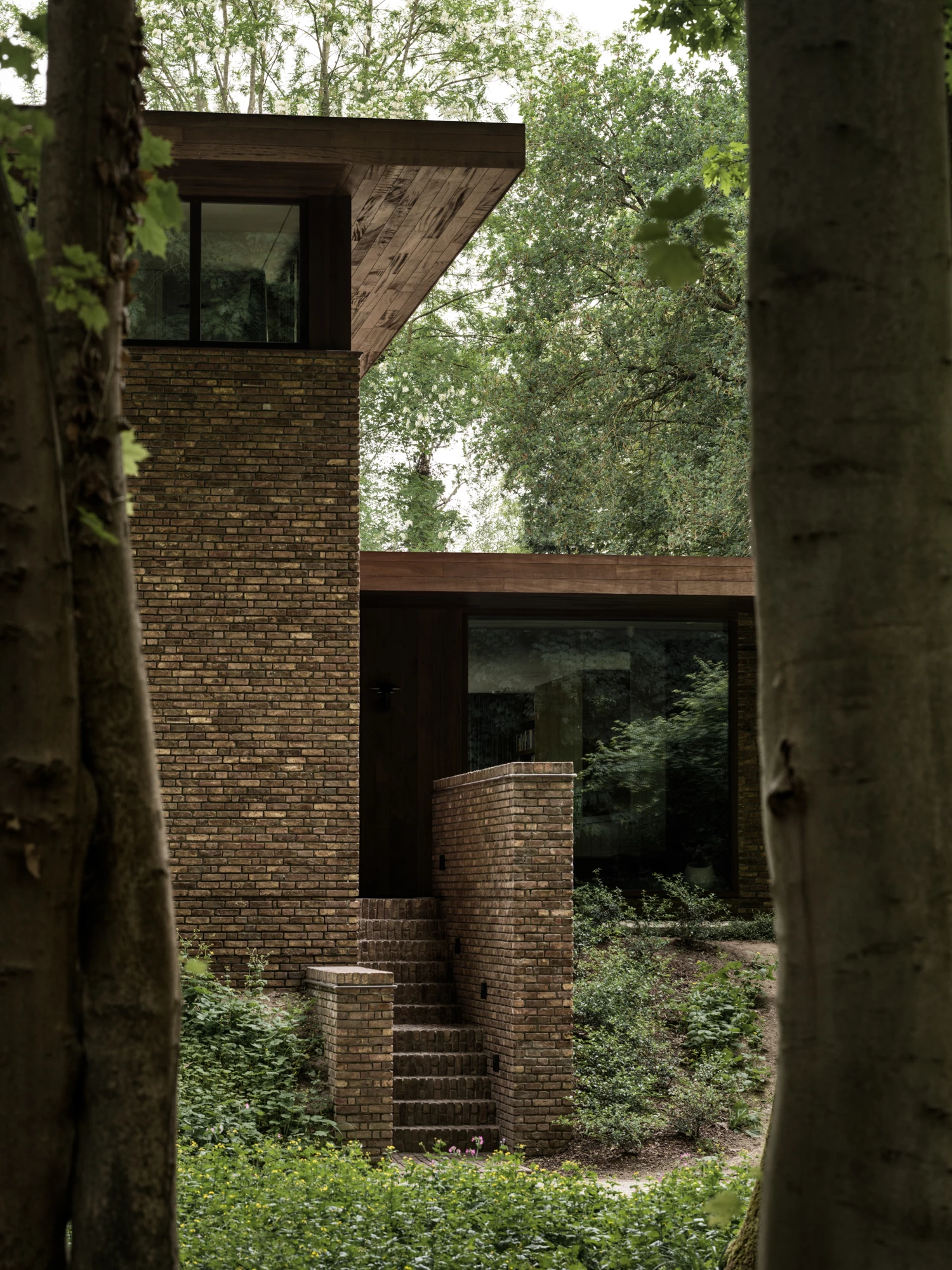
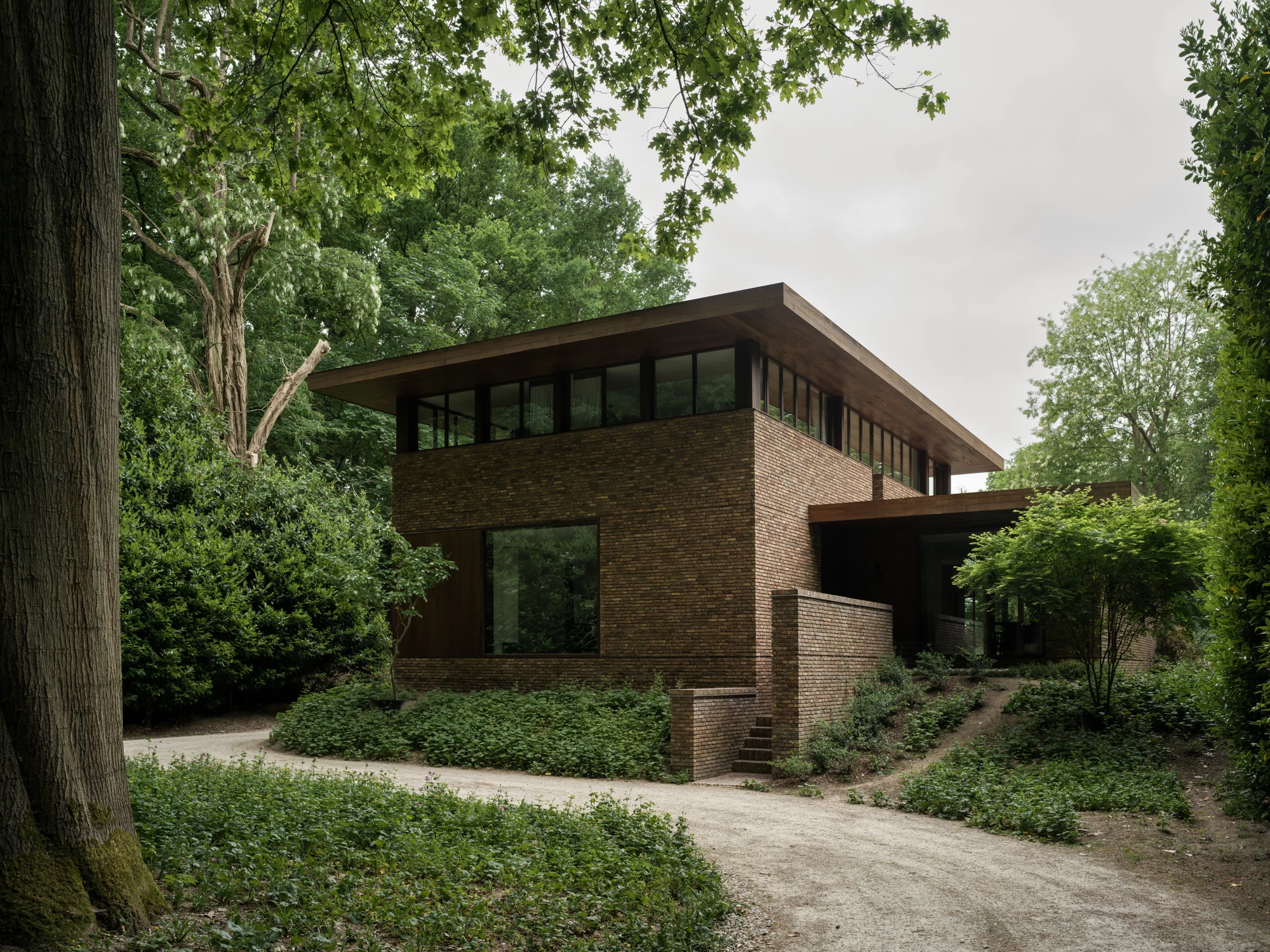
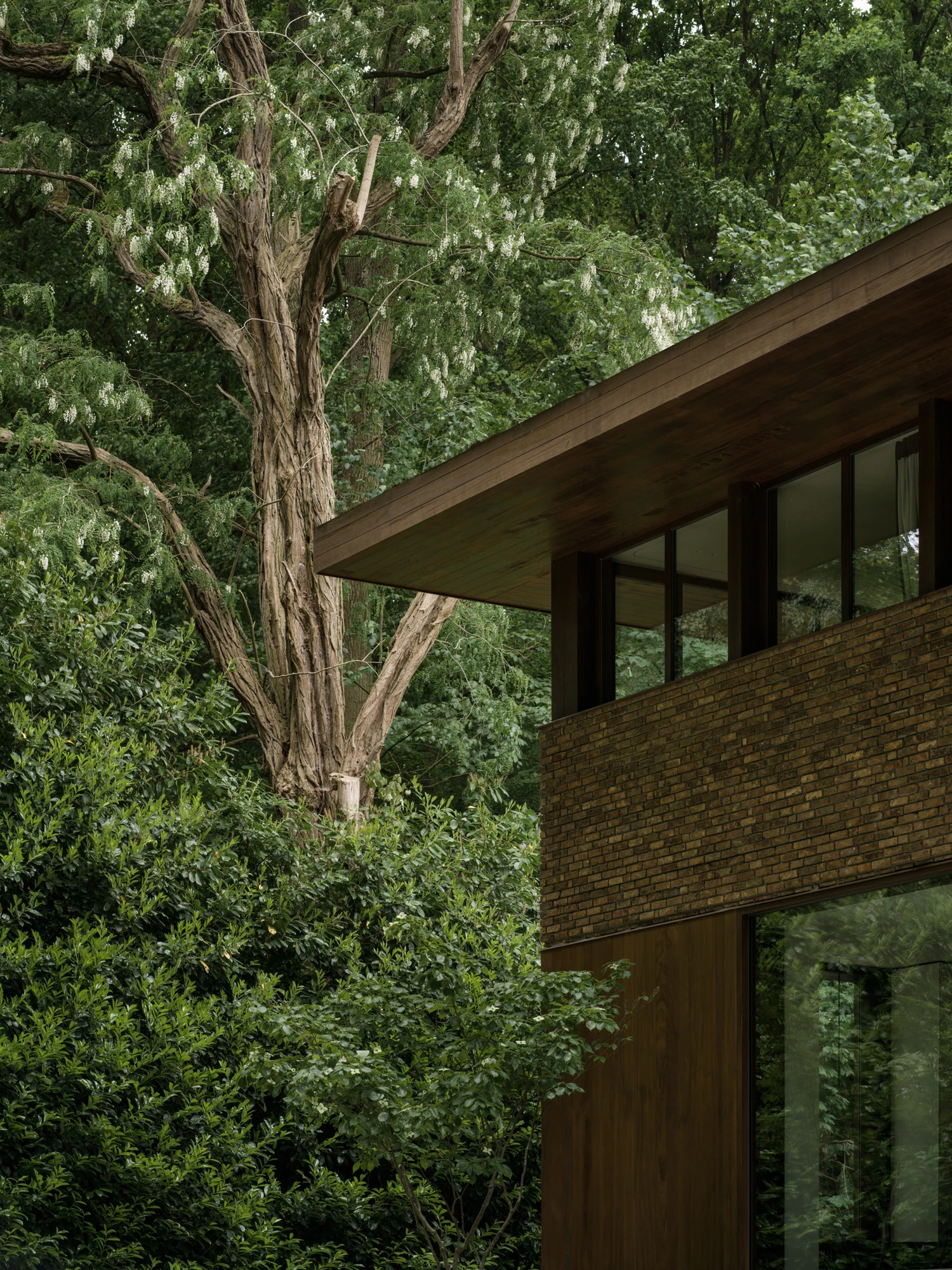
Deep in the verdant forests around Sint Martens Latem, a contemporary house has already camouflaged into its surroundings, expressing an aura of another era like an old soul. It seems as if the density of nature has impressed itself into the texture of its reclaimed brick walls and the forest flows up to its edges, climbing into the architecture’s own topography.

Integrating architecture into nature was one of the key principles of American Modern architect Frank Lloyd-Wright (1867-1959). His 1935 house, Fallingwater in Pennsylvania captures this concept, with brick and concrete volumes echoing the stepped levels of the waterfall that it overlooks.

The iconic building was a starting point for architects Decancq Vercruysse when designing this house for a family who wanted to feel closer to nature and immerse themselves in the peaceful and thought-provoking atmosphere of the forest. It was therefore important to take cues from the forest itself, sensing and responding to its energy.

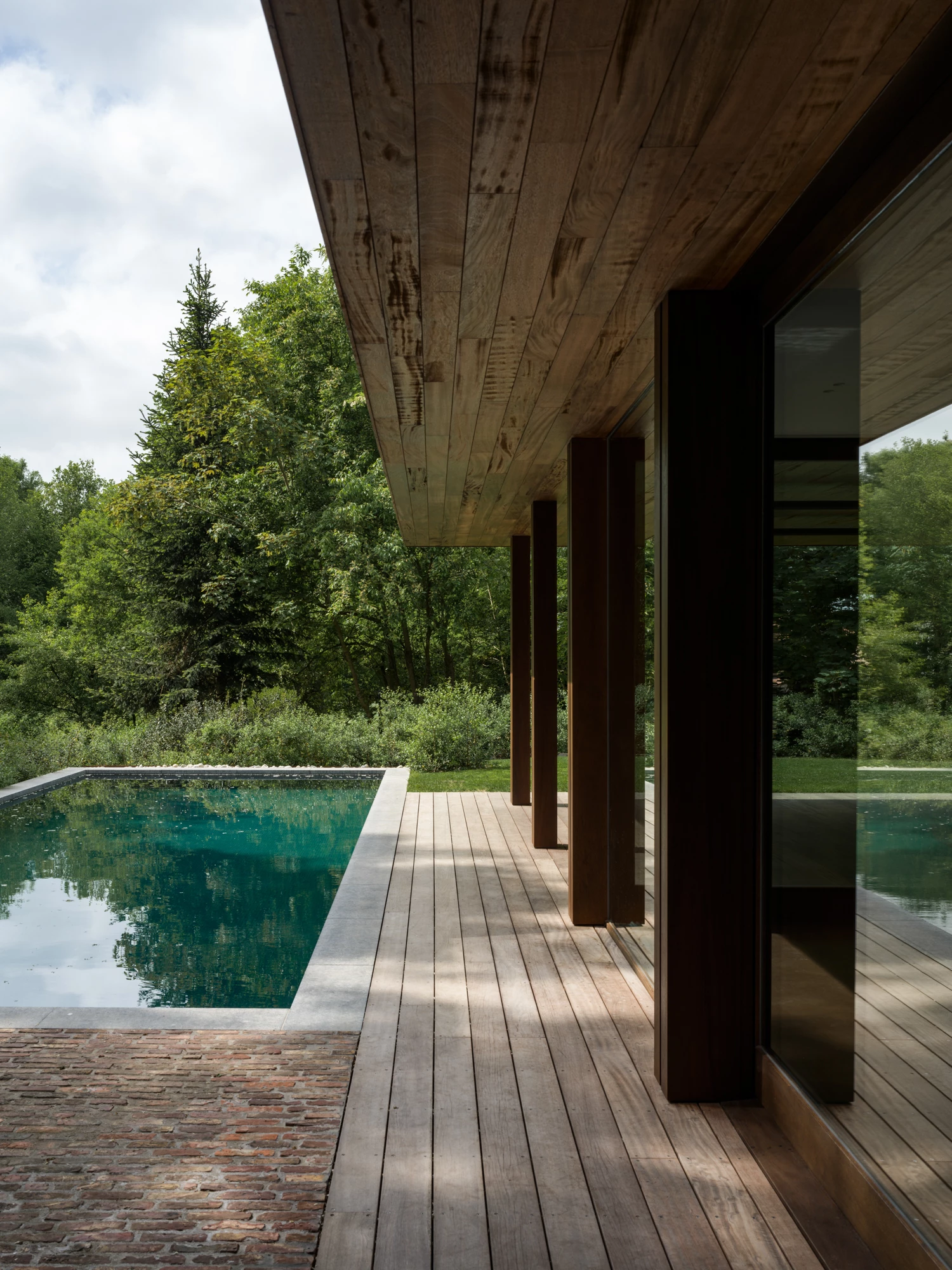
The house sits on a raised clearing, emerging and rising from the ground towards the light. One side reflects the enticing solidity of the forest, and the other, oriented south-west, opens up to the clearing with canopies sheltering outdoor living spaces and a swimming pool.
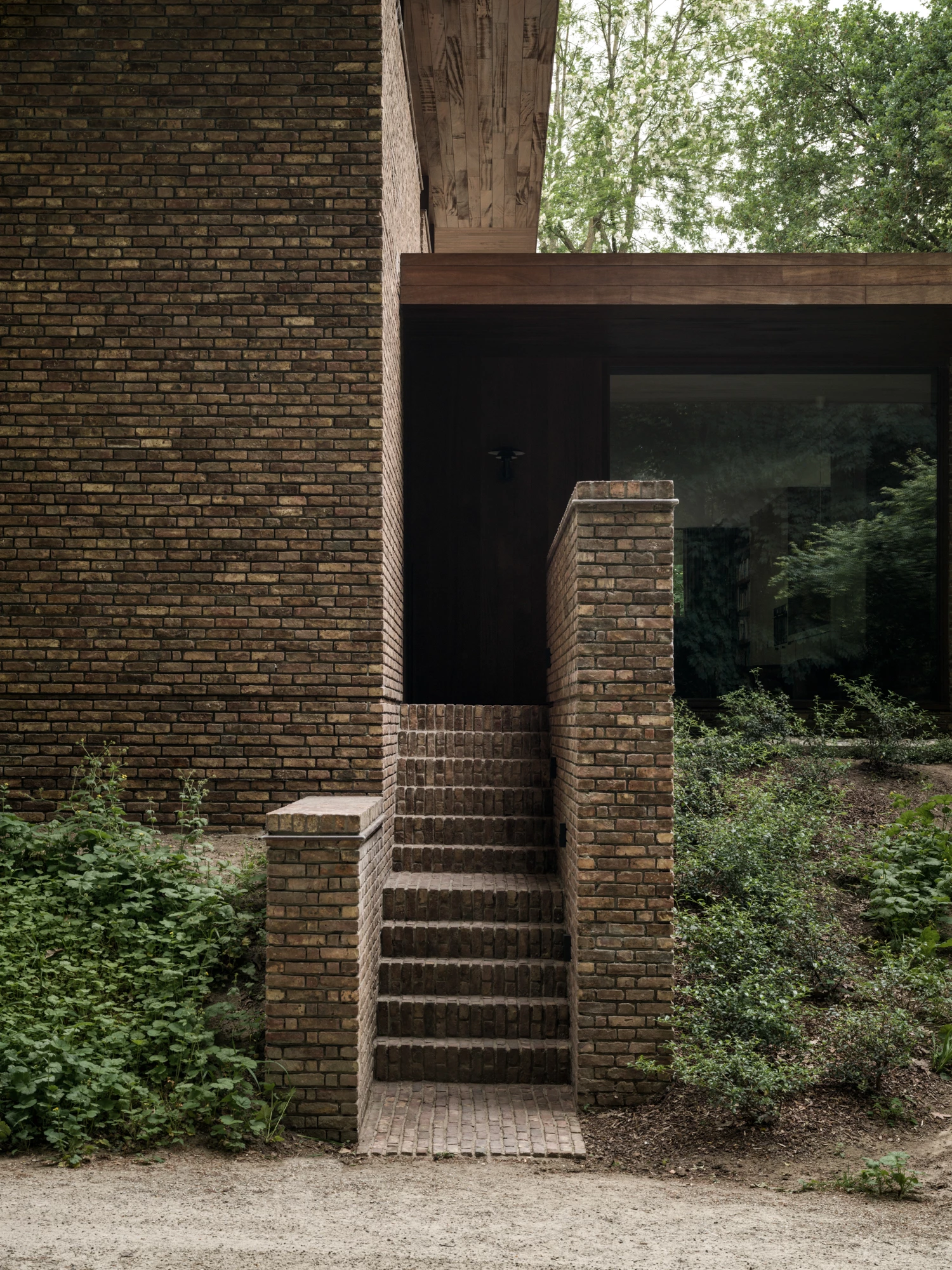
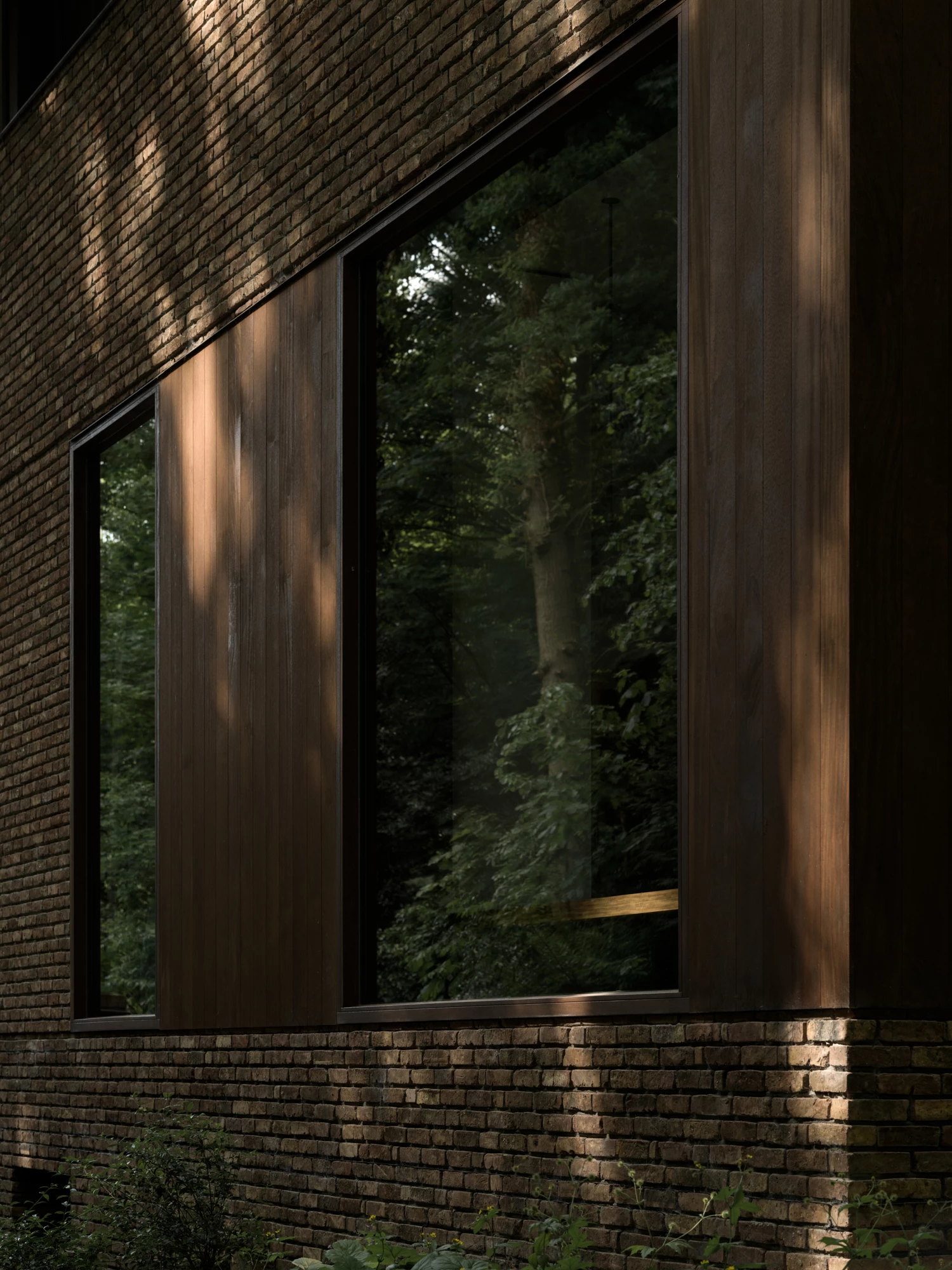
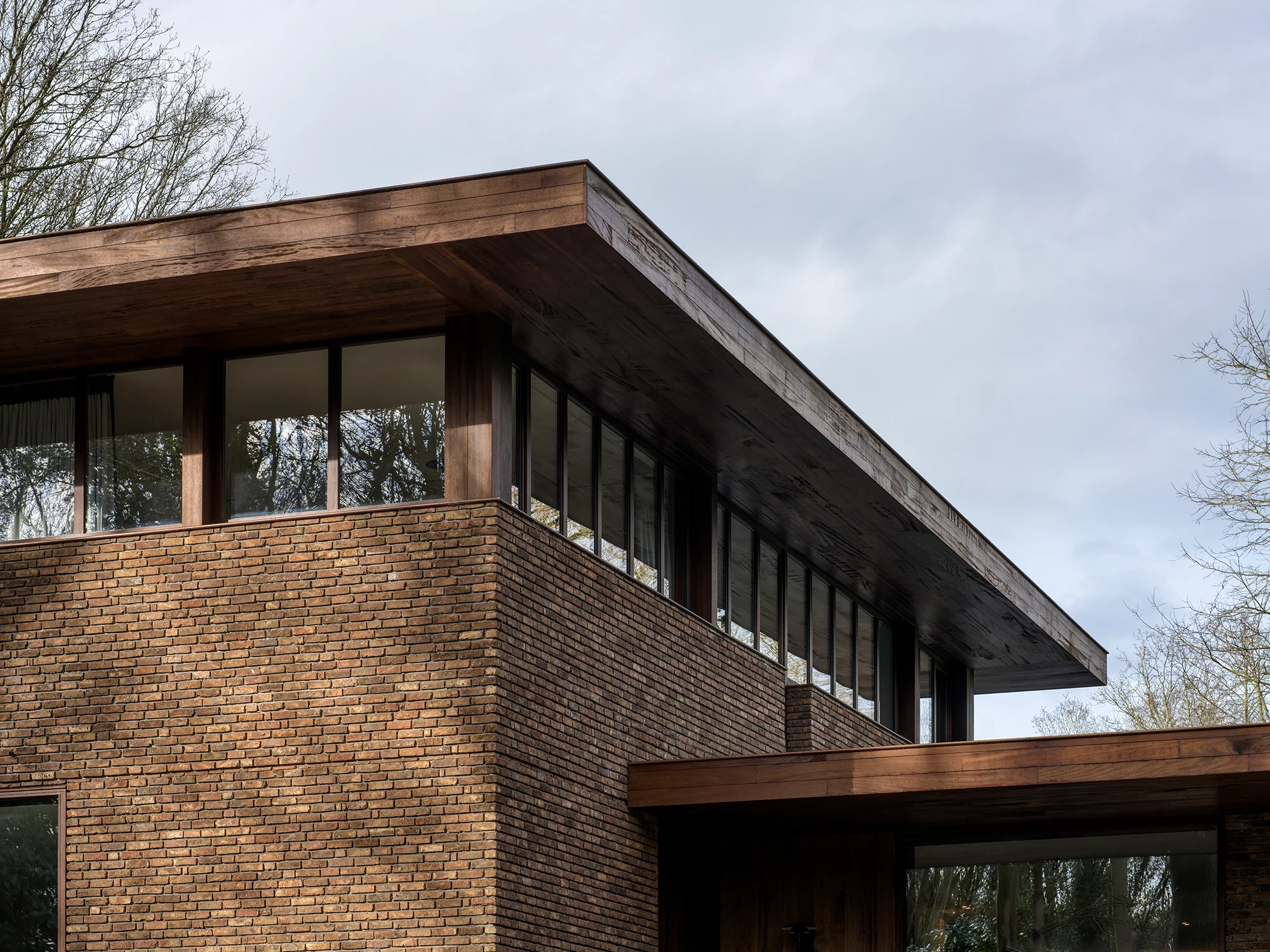
Materials echo the earthy colours of the forest itself. The textured brown bricks, reclaimed from an old water reserve after filtering water for more than 200 years, were applied with a recessed mortar, casting a shadow gap to create a sculptural, dimensional effect.

The system of Ash wood canopies and panels blend with the brick in colour, yet bring subtle contrast with their smoother texture. The horizontality of these canopies was informed by traditional Japanese temples, also a key influence for Wright, who travelled extensively and worked in Japan.
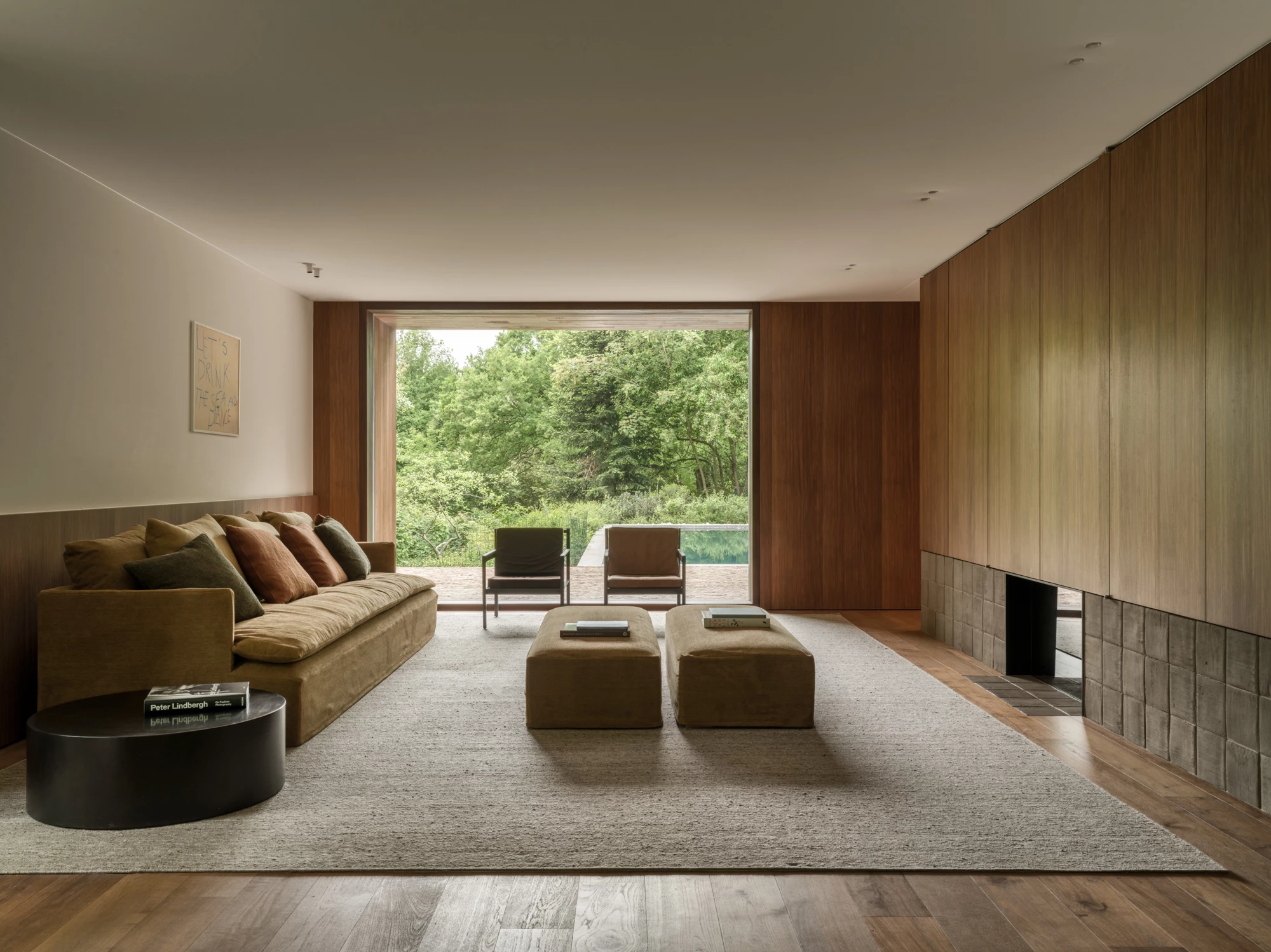
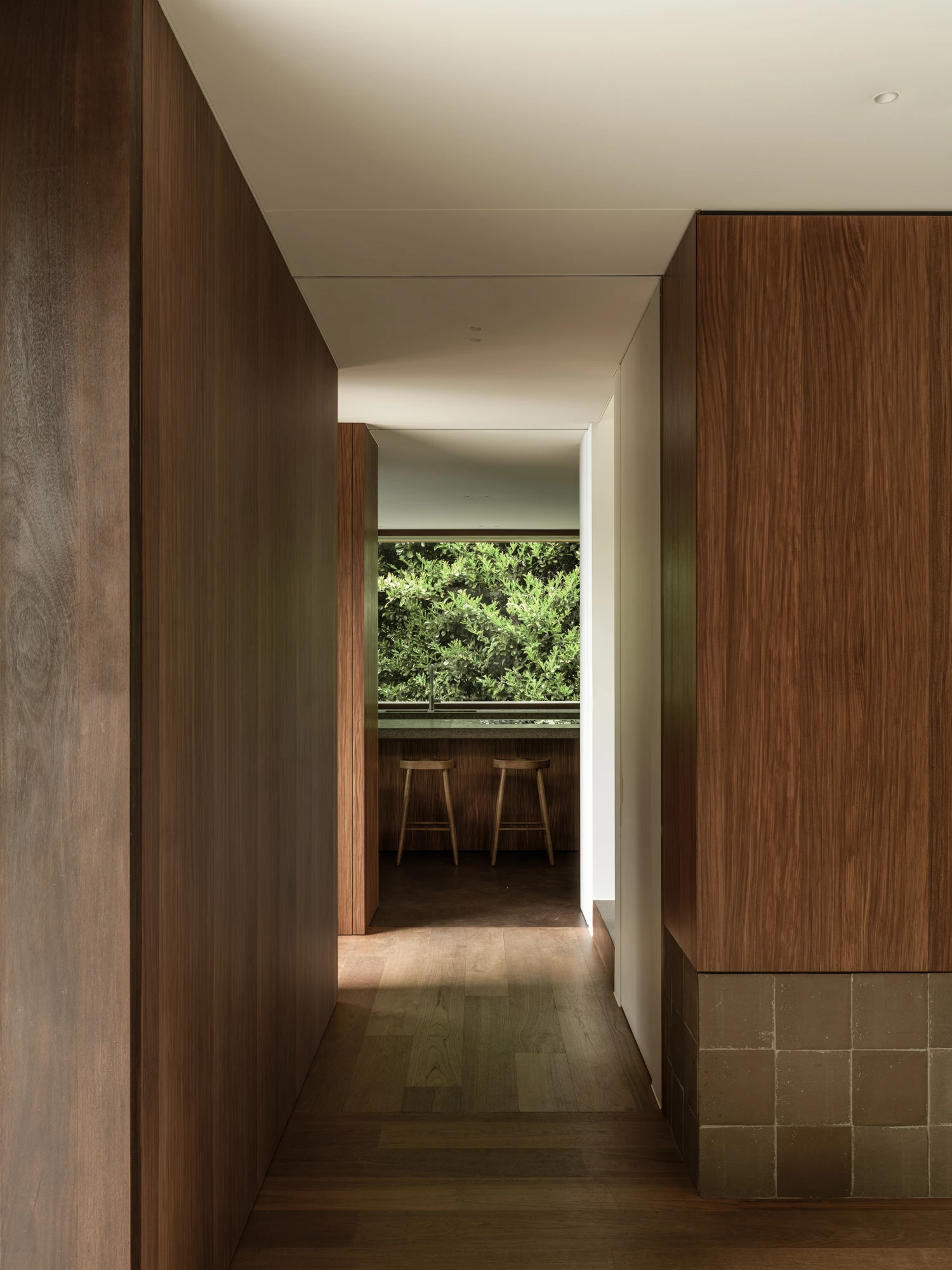
Responding to the human experience of the forest, the house balances the need for both shelter and freedom. On the ground floor, every living space connects to nature on both sides – with a picture window framing the dense wooded landscape on one side, then a floor-to-ceiling window or door opening to the garden on the other. 

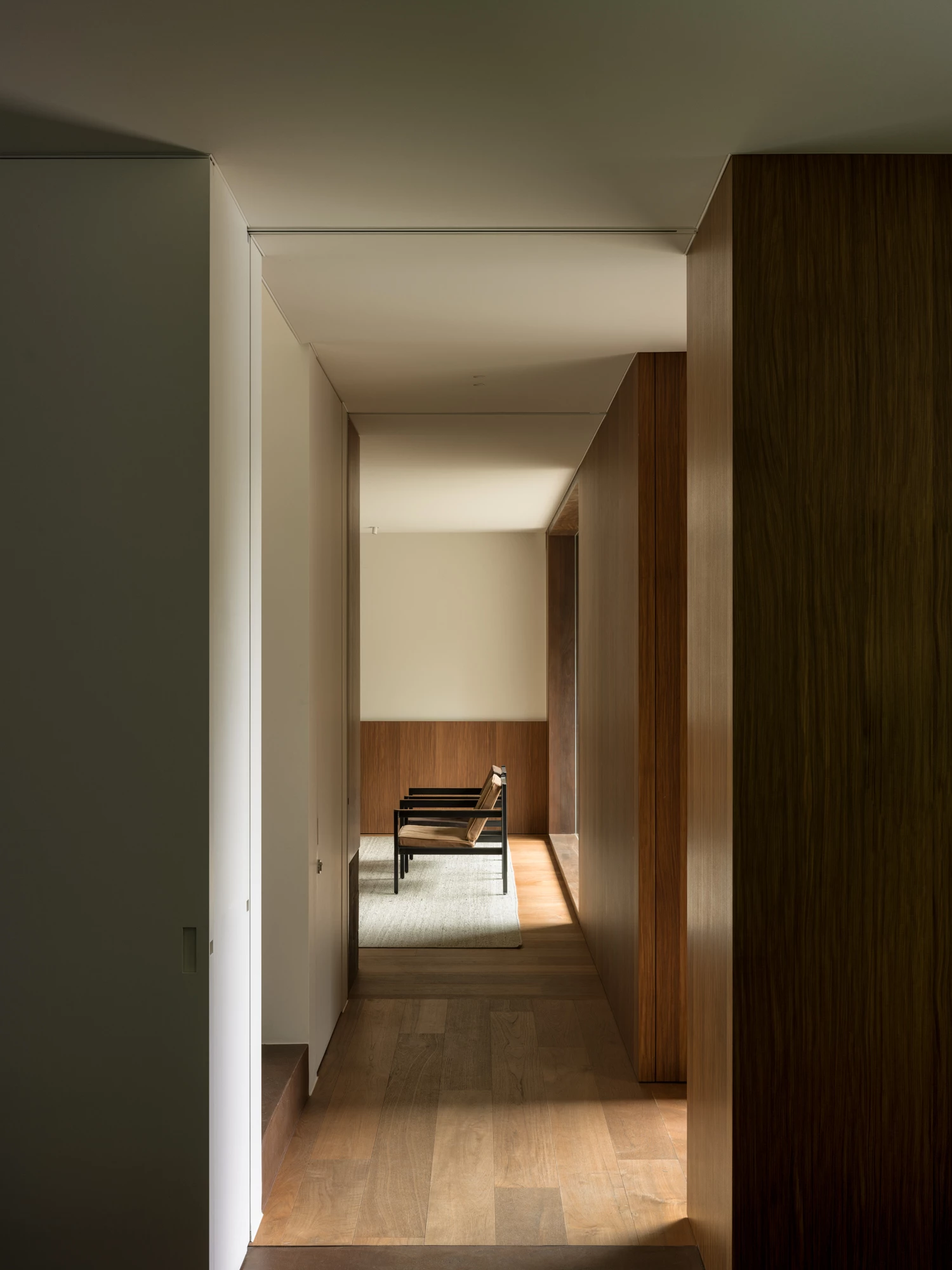
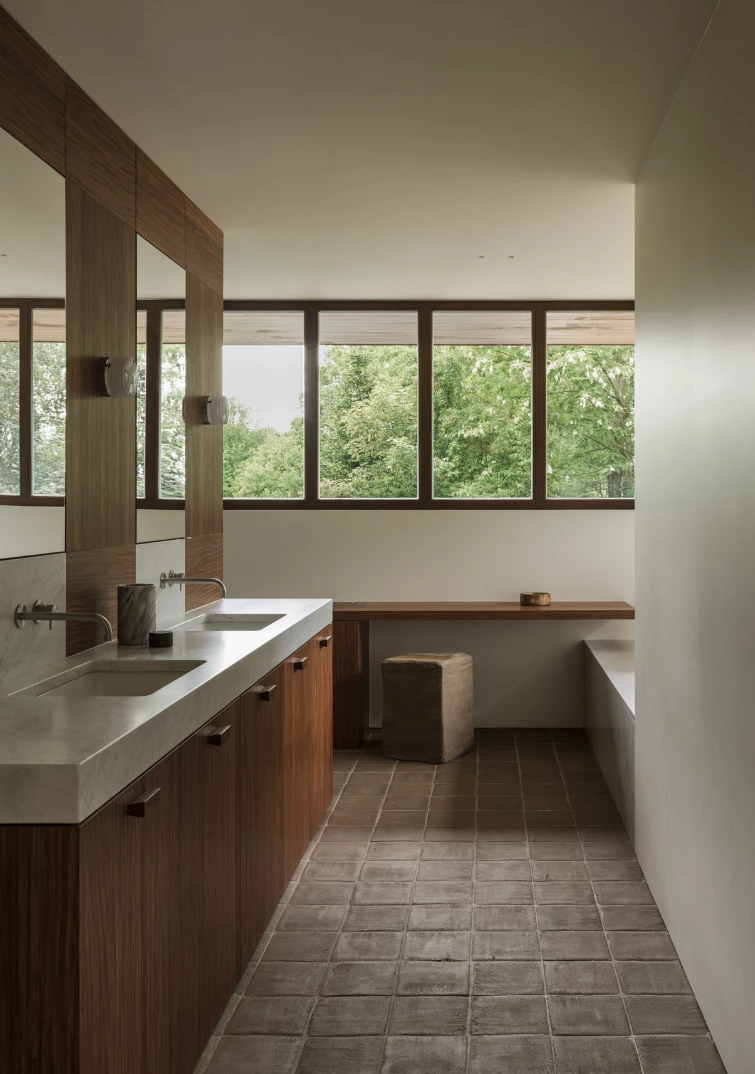
For example, the open plan kitchen sits between two options: a breakfast nook or a generous dining space that flows out beneath the canopy to the outdoor table and fireplace. The large windows of the living space are in turn balanced with a sunken office and intimate reading room on the other side of the house. Upstairs, windows reach about the whole level, casting views of the dappled treetops into the bedrooms and bathrooms.
In the summer, the family spends long days outside by the pool and in the shade of the canopies. The low-maintenance garden of native, evergreen plants flows all the way up to the architecture, while alternating with the wooden decking, one area extends the vertical brick walls horizontally, extending the architecture into the land. Meanwhile in winter, they choose some books from one of the large bookcases, and a cosy place to curl up together to read, feeling safe and protected from the great mystery of the forest beyond.
Photograpy Piet-Albert Goethals
« back to homepage