Returning a farmhouse back to the land
A modern farmhouse finds a new geometry of classical proportions, newly grounded within the landscape and open to the flow of nature.
The Belgian modern farmhouse is distinctive for its minimalist approach. The typology embraces the history of agriculture and connection to the land through heavy dignified volumes and somber lines – yet also captures the beauty of rural living today with expansive walls of windows and spacious rooms. The architectural economy only magnifies the beauty of the flat, expansive landscapes and moody skies for which Belgium is renowned.

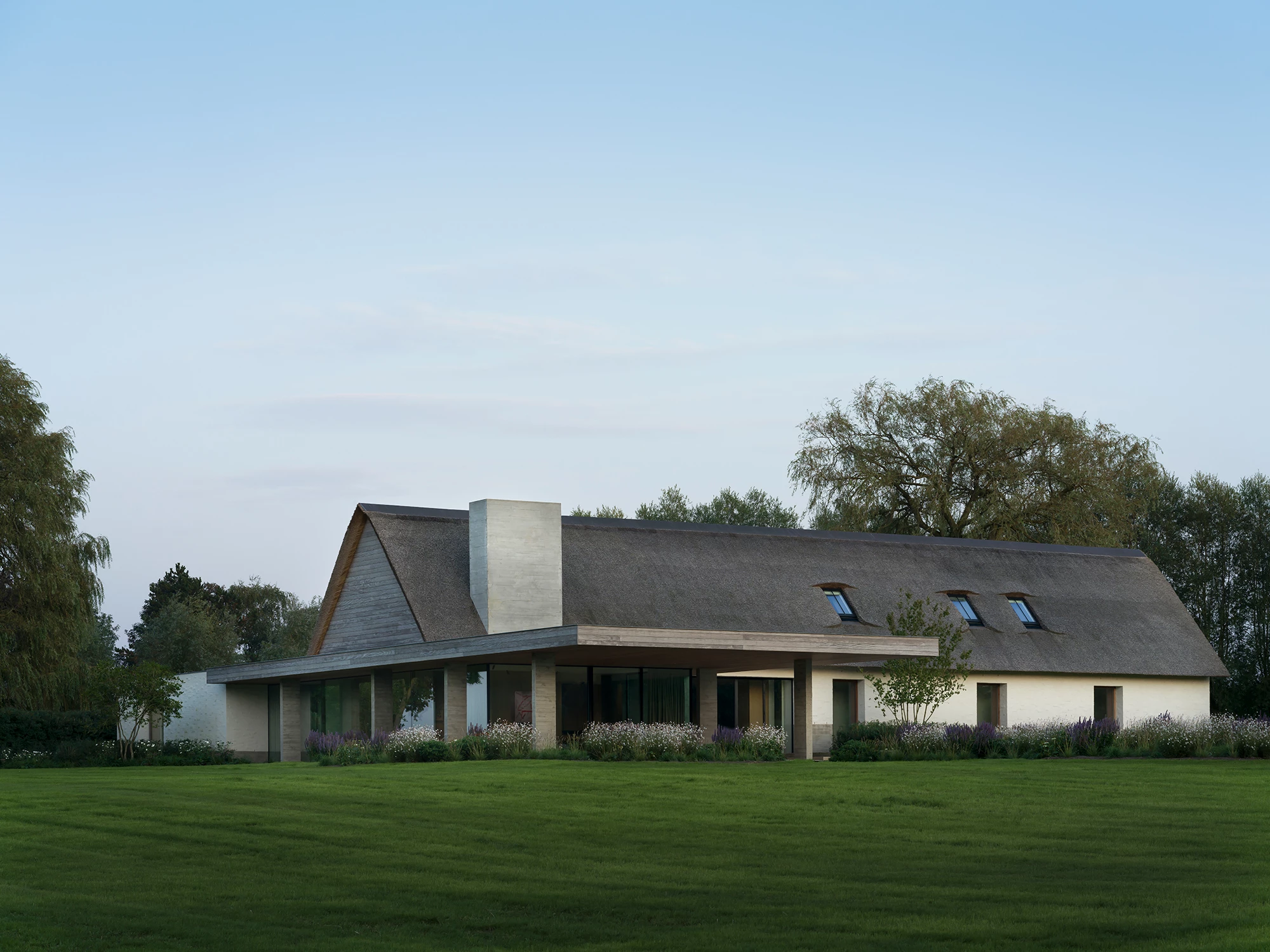
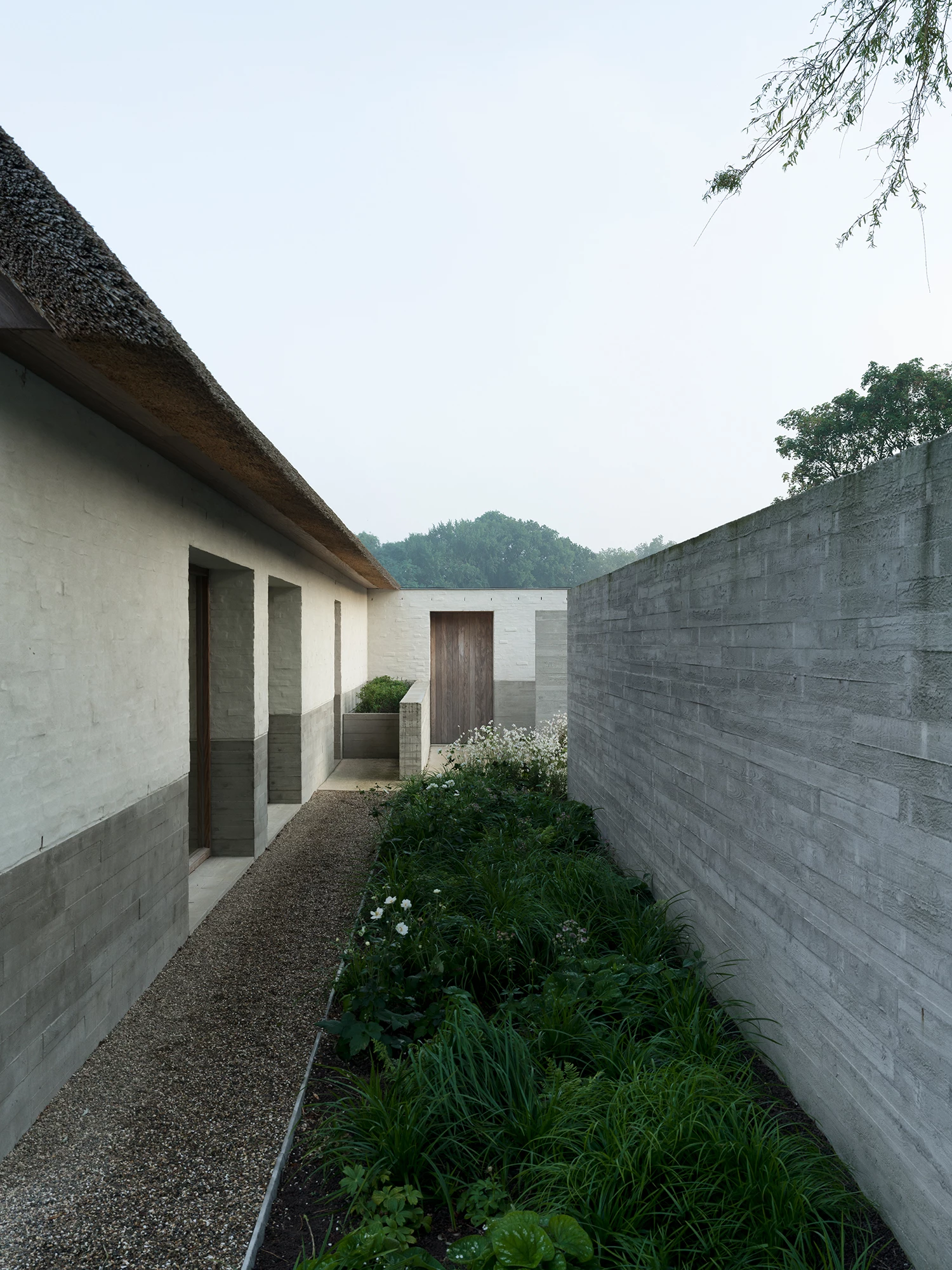
This Flemish farmhouse, located next to the green surrounds of the Palingbeek nature reserve, fulfils the archetype. Once unremarkable with small windows and a flat roof, it has been thoroughly renovated and remodelled by Decancq Vercruysse. Contemporary interventions informed by its history and context have transformed it into a generous, serene family holiday home that is newly opened up to nature.
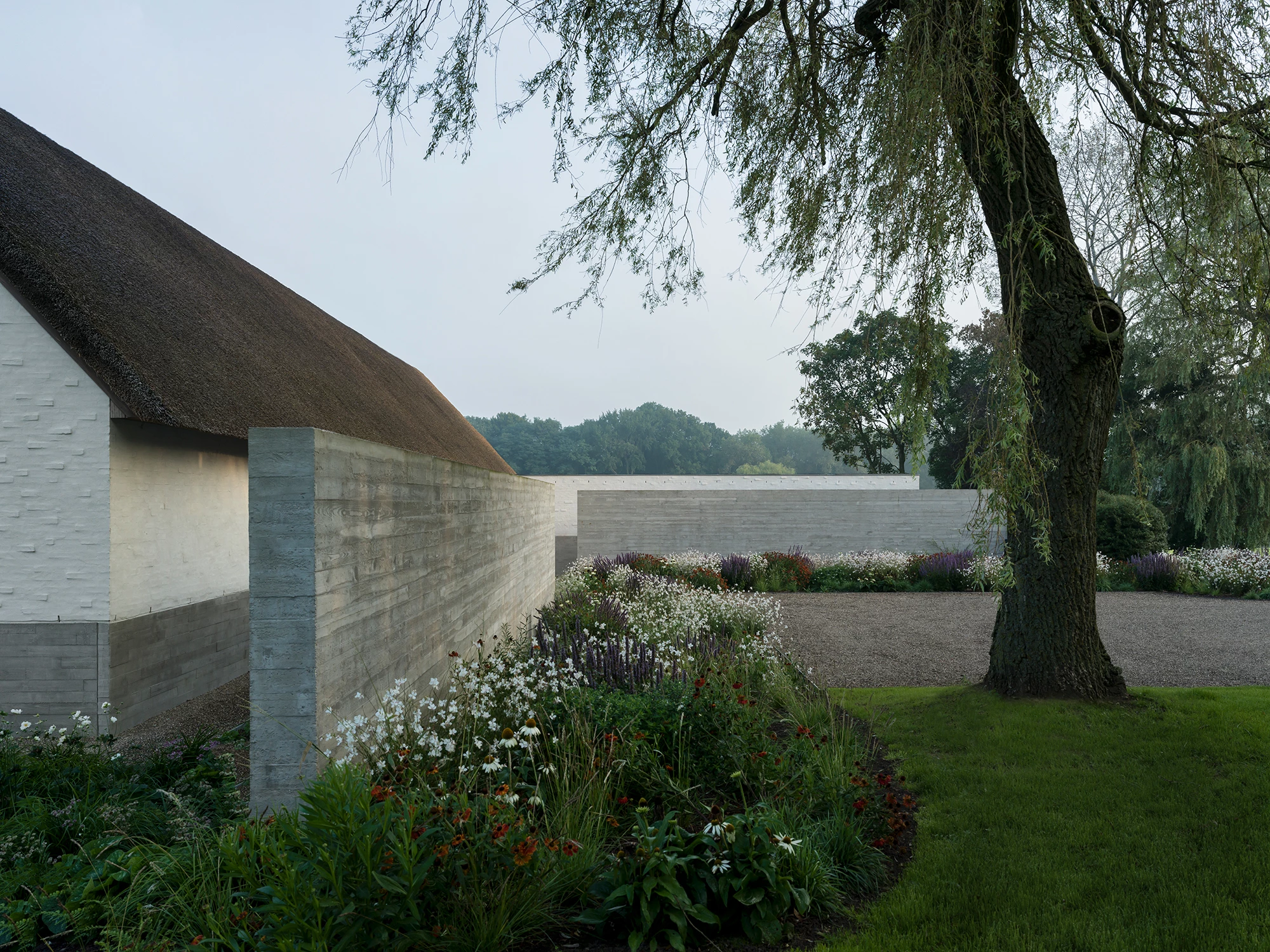
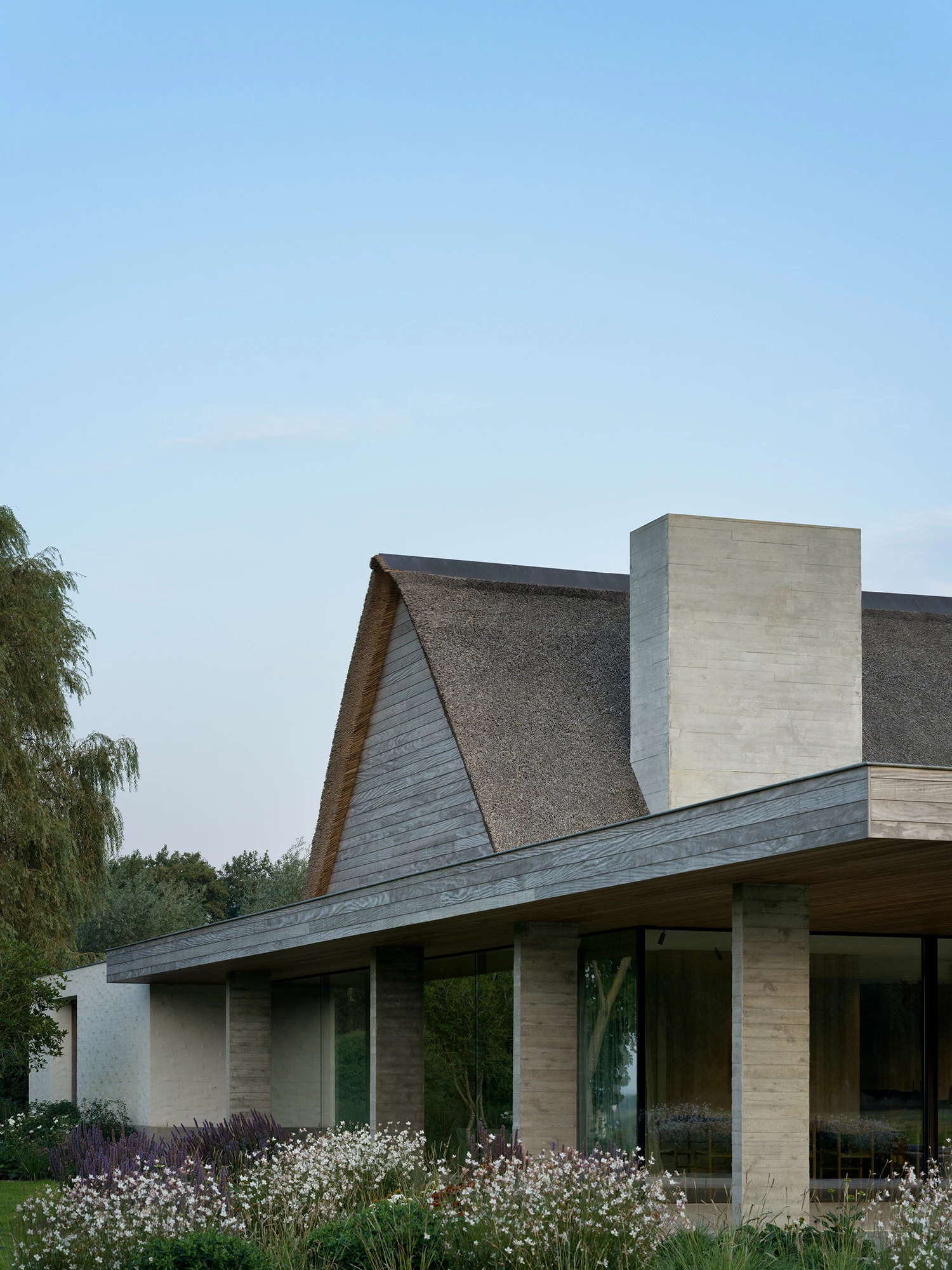
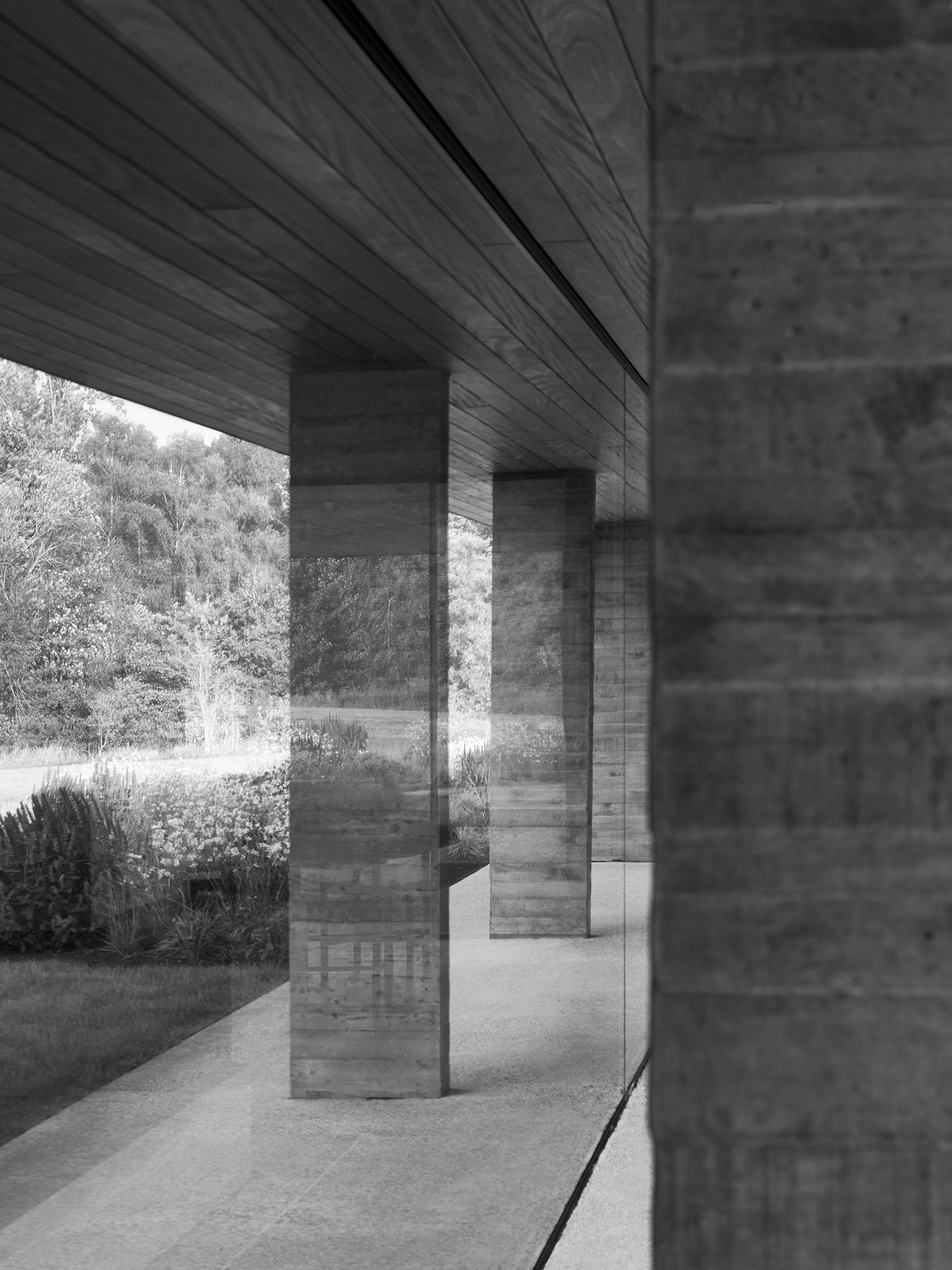
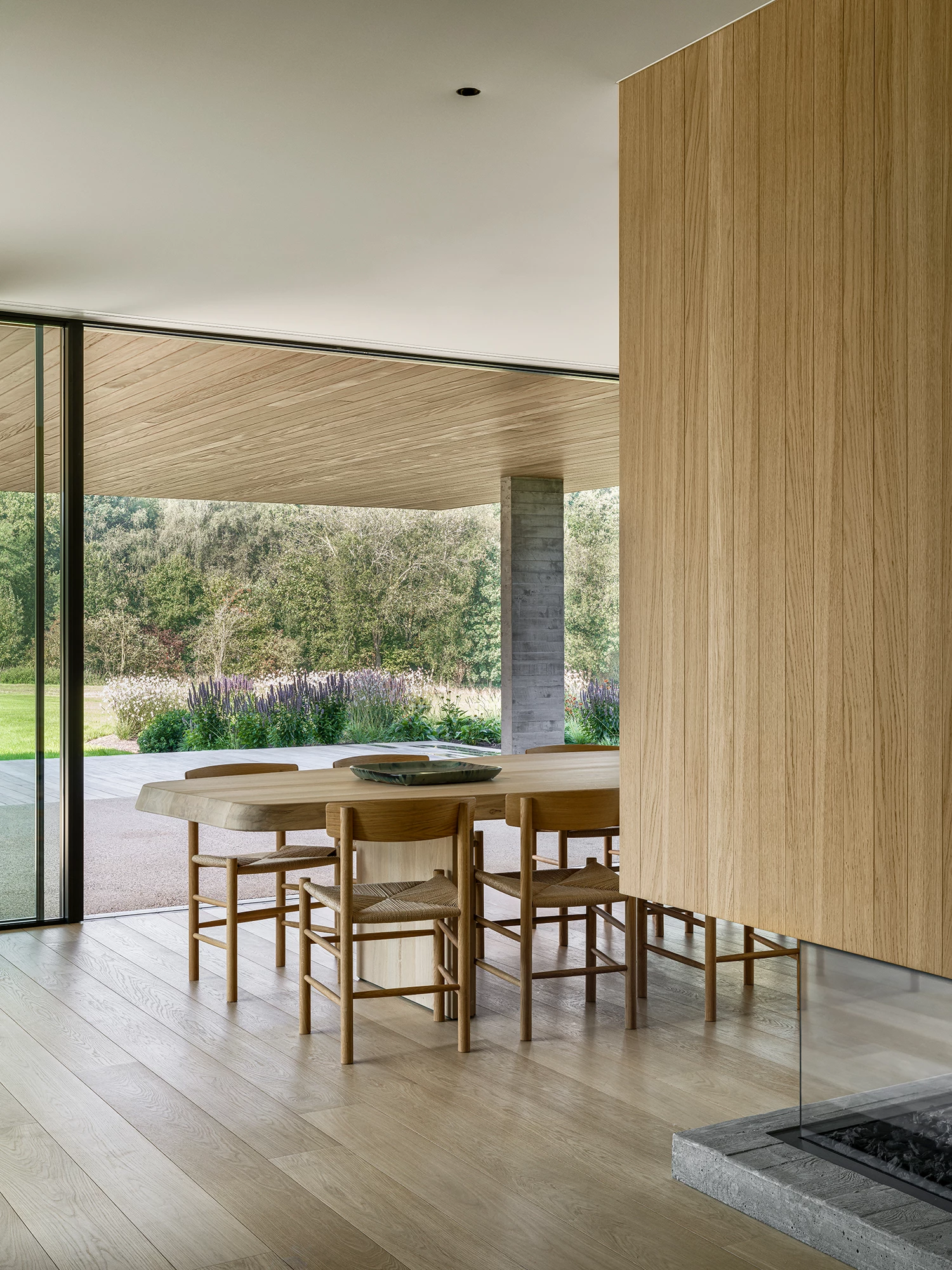
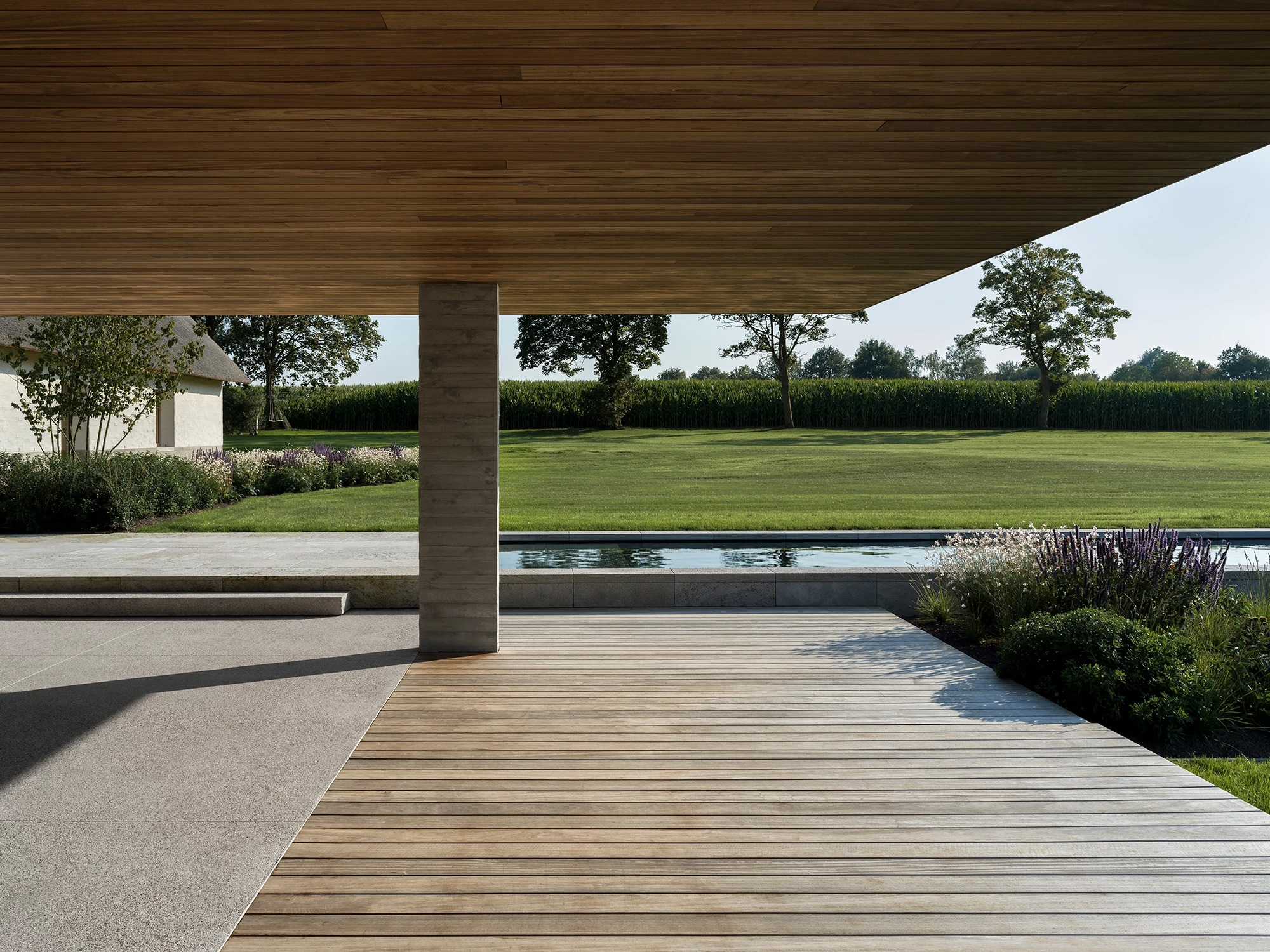
While its white brick walls continue the style of historical farmhouses, poured concrete provides a new framing tool. Firstly, a concrete plinth wraps the exterior, echoing the grounding base of the Zuienkerke Barn in West Flanders. Secondly, a concrete-roofed cross section extends a covered outdoor terrace into the landscape, beyond which is a long rectangular swimming pool. Finally, a slim concrete chimney rises up in a sculptural gesture.

Practically, this framing has created a new exterior layer for outdoor living in the landscape that was previously non-existent. Now, the landscape flows into a garden and new opportunities for walking, seating, dining and swimming all become part of the experience of the house.

Formally, these architectural gestures break up the extreme horizontality of the original footprint, creating a sculptural geometry. The new pitched roof further contributes to this modelling. Informed by Flemish agricultural buildings, it was rebuilt in thatch. The craft technique connects back to historic methods – yet its monolithic form and consistent density also expresses modernity.
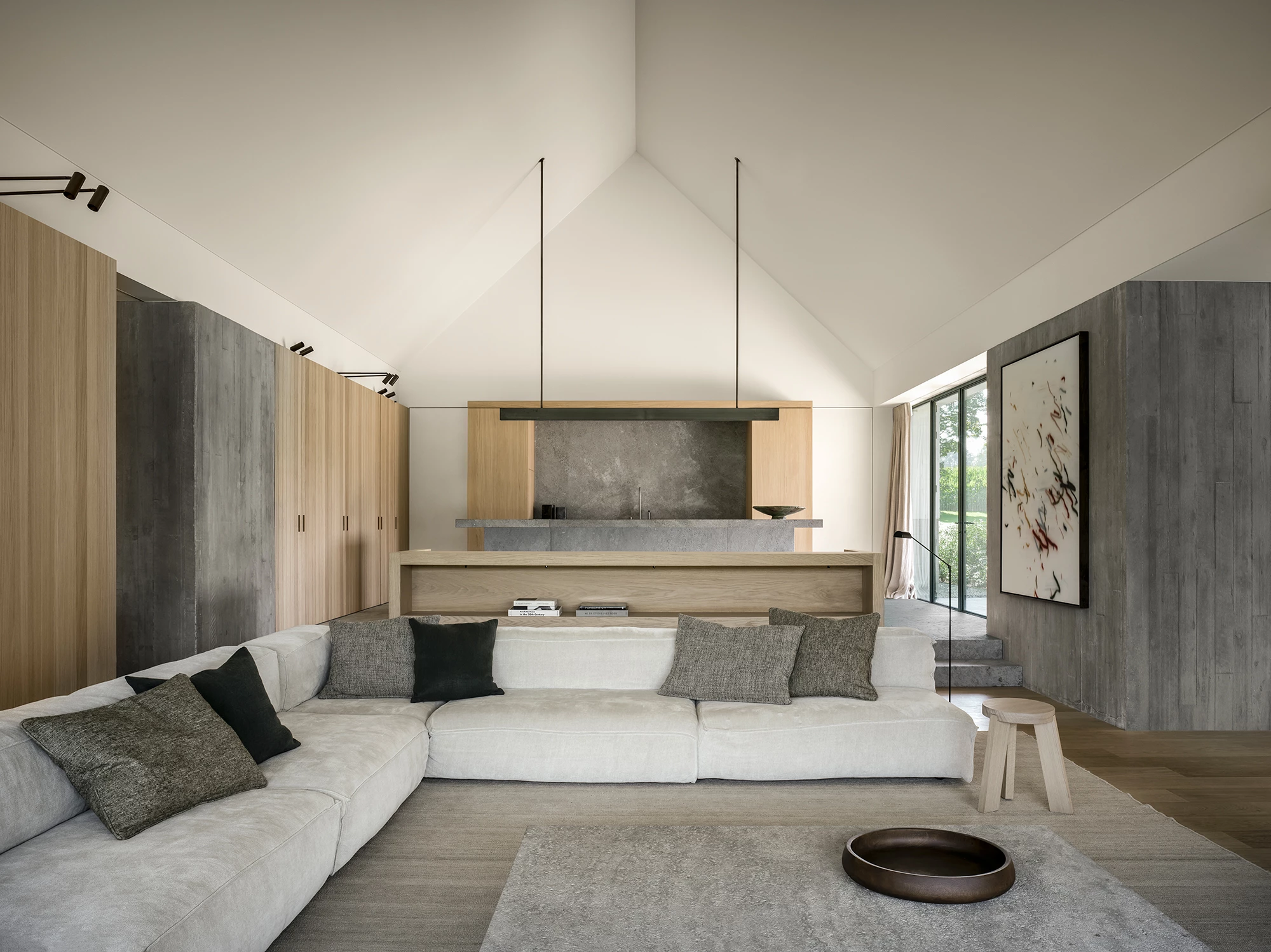
Internally, the pitched roof opened up more space. The new roof height reveals itself in the double height living room and kitchen, creating a distinctive spatial experience. In another part of the roof are two bedrooms, which accompany the master bedroom on the ground floor. This programme was designed in consideration of the path of the sun, with the feeling of space and daylight only magnified by floor-to-ceiling expanses of windows in the living spaces.

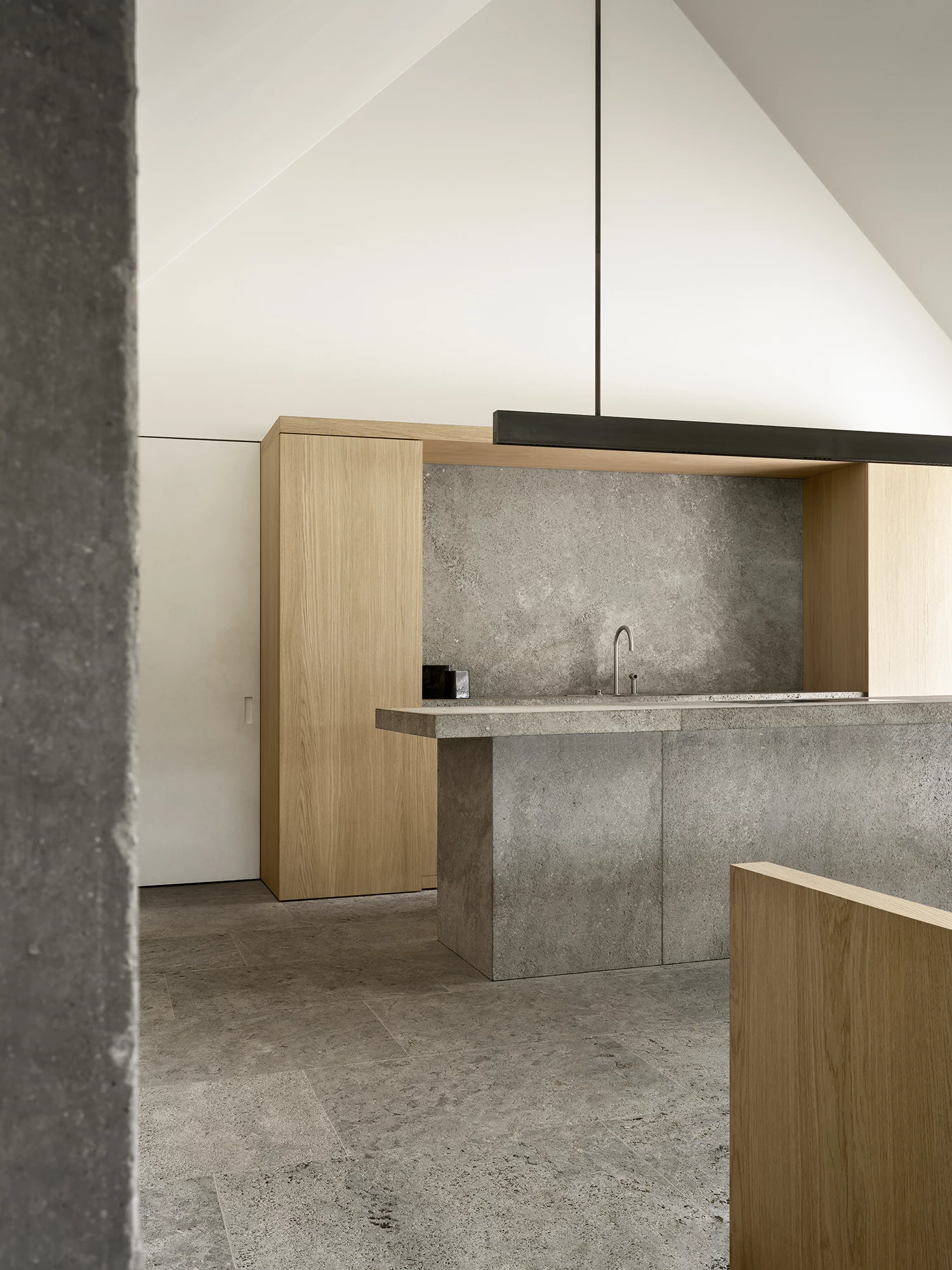
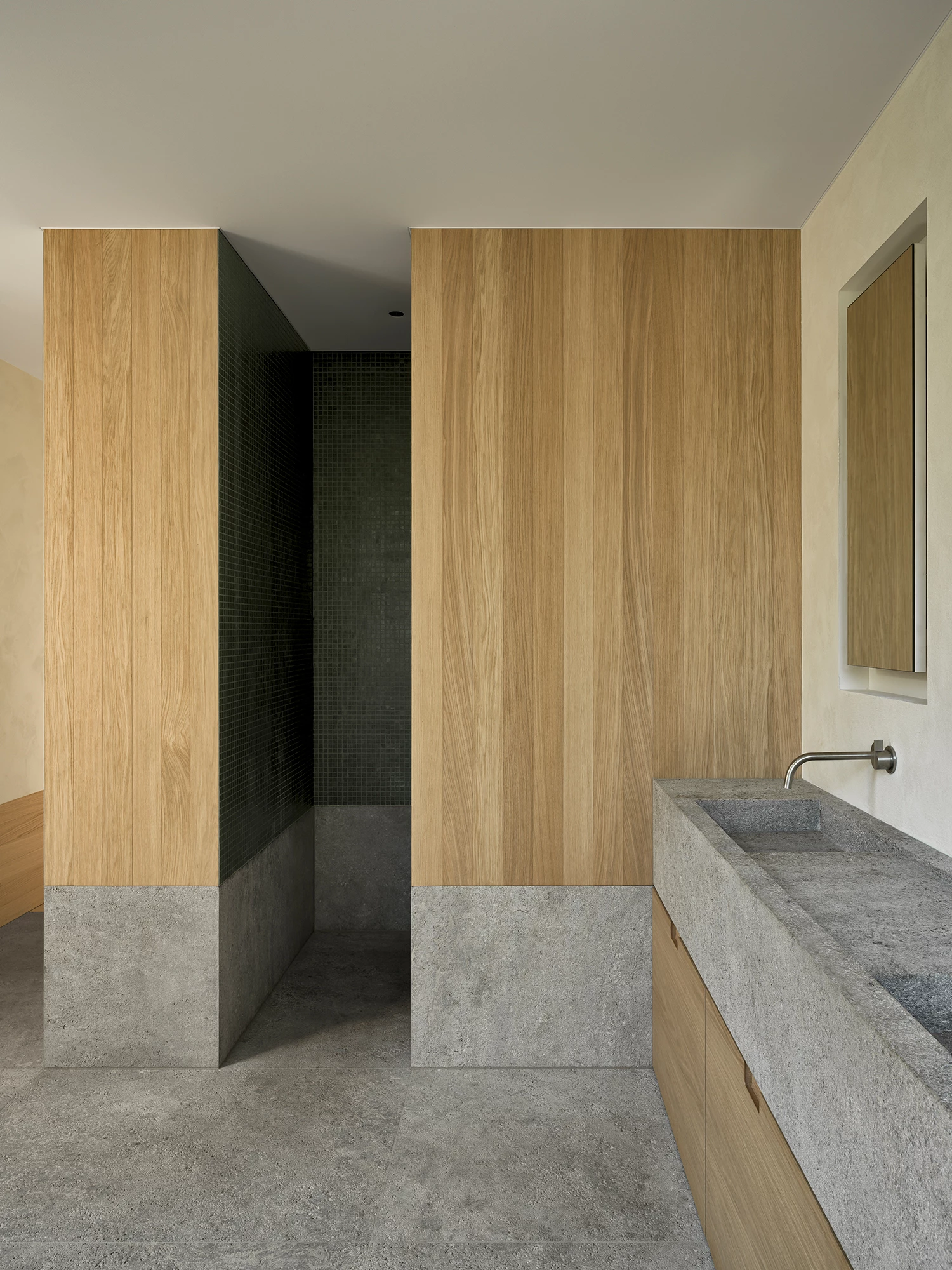
Interior materials are almost brutal in their simplicity, offering a durable yet well-finished stage where family time and nature are prioritised. The walls are traditionally plastered, flooring is mostly Belgian oak and there is a reoccurring German grey stone that features most prominently in the kitchen, echoing the exterior concrete, yet also referencing historic Belgian interiors. A green mosaic in the bathroom creates a spa-like ambience.

Minimalist, yet with a classical elegance in its simple material palette, spatial experience and architectural form, this modern farmhouse contrasts old and new, yet discovers a new relationship to the landscape. The modern relationship with nature is certainly different from the past, yet it must be cherished for what it provides us still.
Photograpy Piet-Albert Goethals
« back to homepage