Balancing work and life at a Brussels pied-à-terre
The interior design of an apartment finds harmony between minimalism, Art Deco, Modernism and the intricate reality of a lived life.
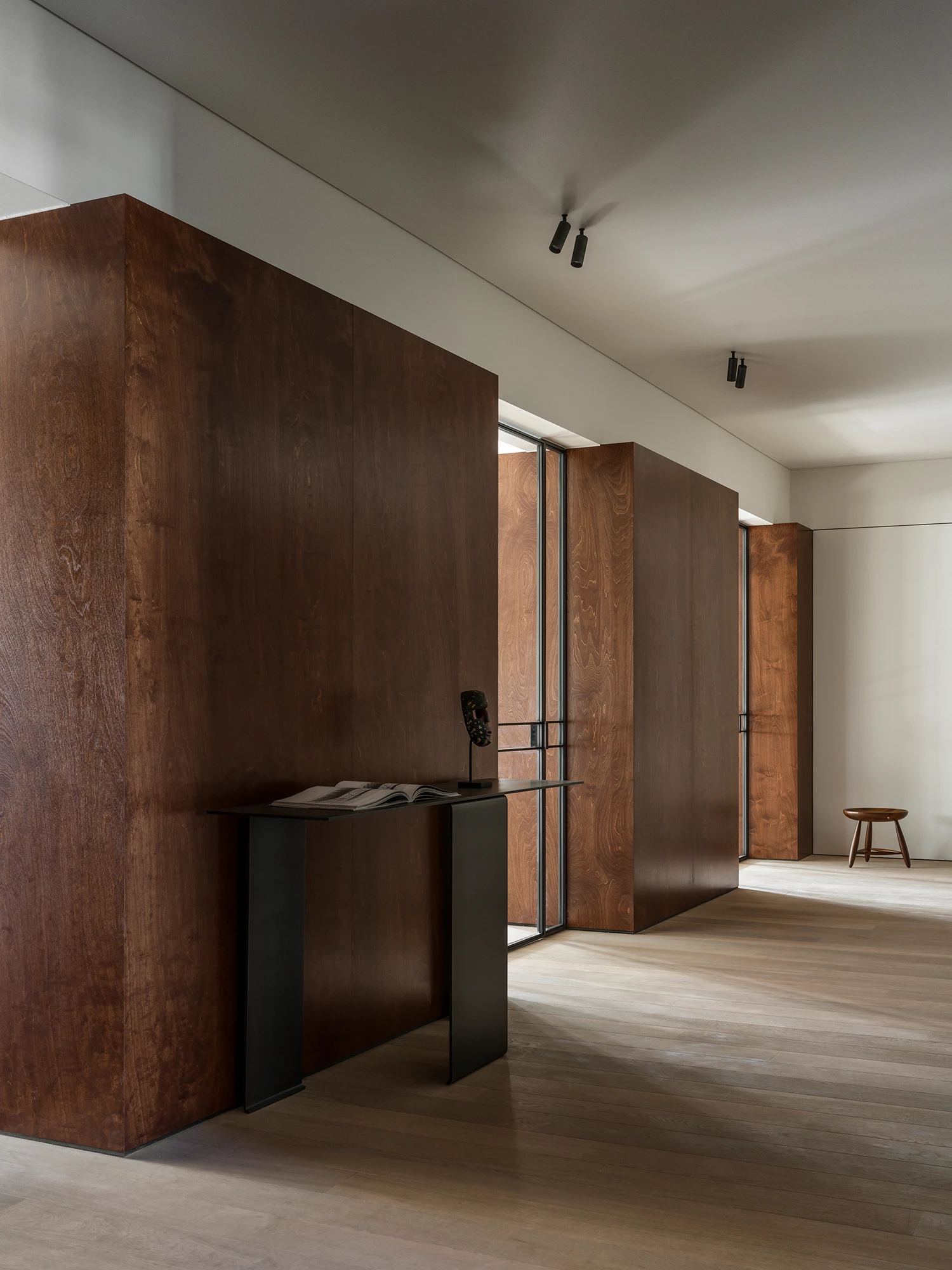
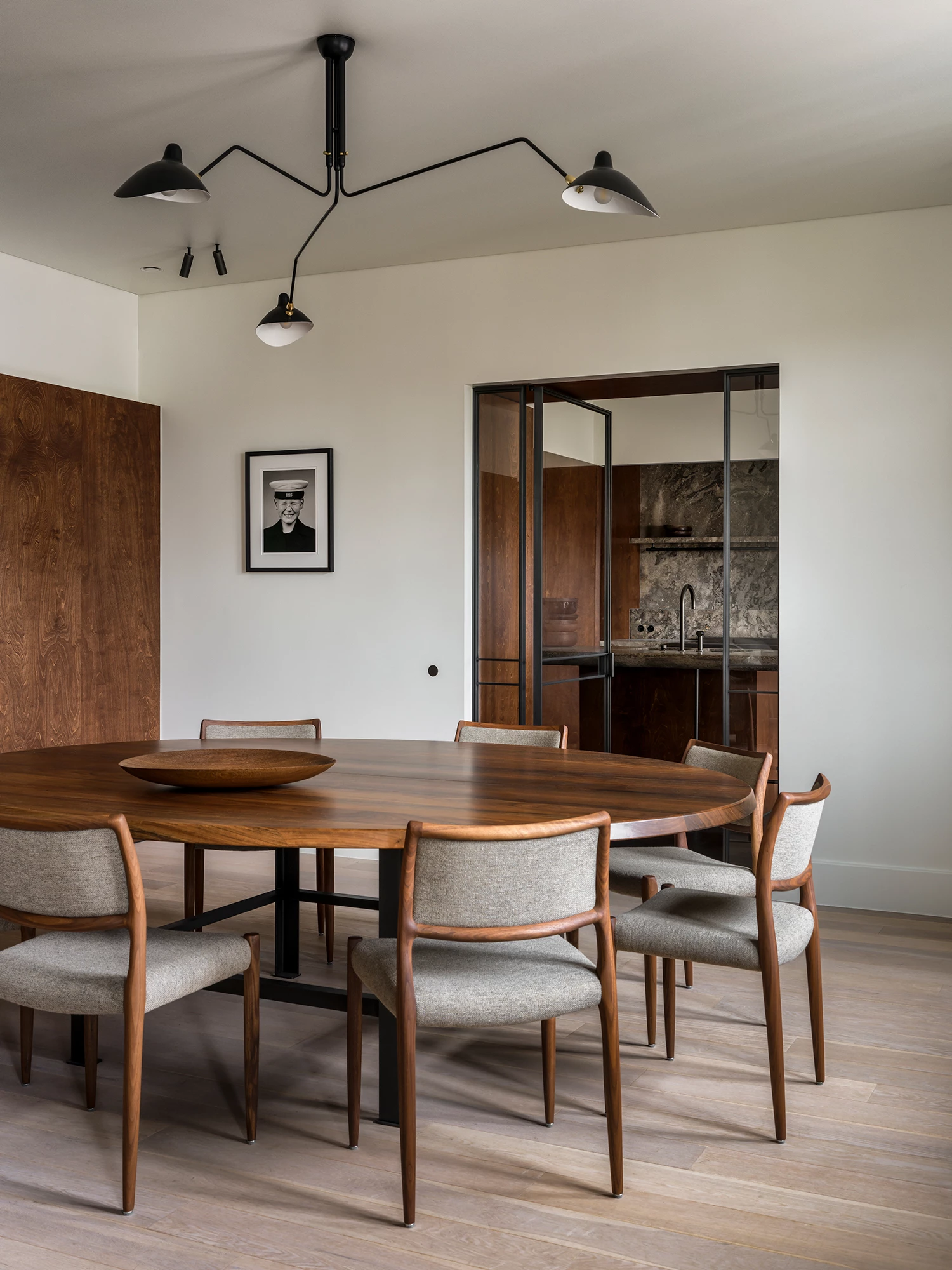
Balance is essential to the architecture of Decancq Vercruysse. It is a quality that comes into play at every stage of the design process, when considering space, interiors, materials, furniture and art. A balanced design seeks to harmonise the complexities of our unique identities into a home; expressing the palette of shades, depths and textures that we each hold within us each day.
At a Brussels apartment designed for an international lawyer, balance comes into play as a design tool to create an elegant and restful pied-à-terre, which simultaneously captures the needs of a busy, travelling lawyer; a father; and an individual. It had to be a solitary workspace, a retreat for recovery, and a place to welcome family members visiting from their home on the Belgium coast.
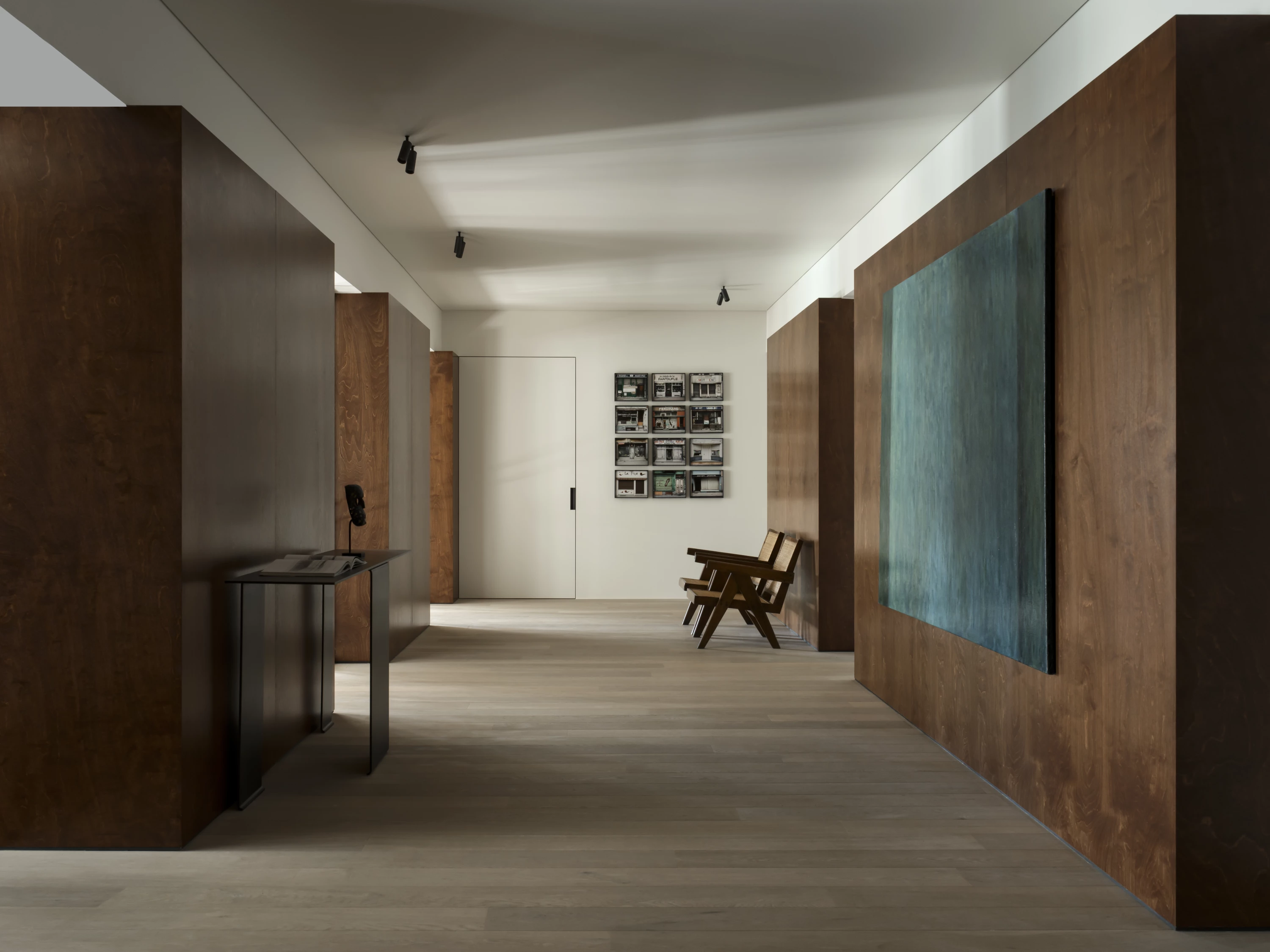
The apartment is located in a former hospital in an Art Deco building, where decorative stone details, wooden panelling and refined metalwork decorate the shared entrance hall. The interior of the home carries across some of this history both original and reinterpreted. Its hallway is part of what was once a long corridor wide enough for two patients’ beds on wheels to pass each other.
At a Brussels apartment designed for an international lawyer, balance comes into play as a design tool to create an elegant and restful pied-à-terre, which simultaneously captures the needs of a busy, travelling lawyer; a father; and an individual. It had to be a solitary workspace, a retreat for recovery, and a place to welcome family members visiting from their home on the Belgium coast.
The apartment is located in a former hospital in an Art Deco building, where decorative stone details, wooden panelling and refined metalwork decorate the shared entrance hall. The interior of the home carries across some of this history both original and reinterpreted. Its hallway is part of what was once a long corridor wide enough for two patients’ beds on wheels to pass each other.
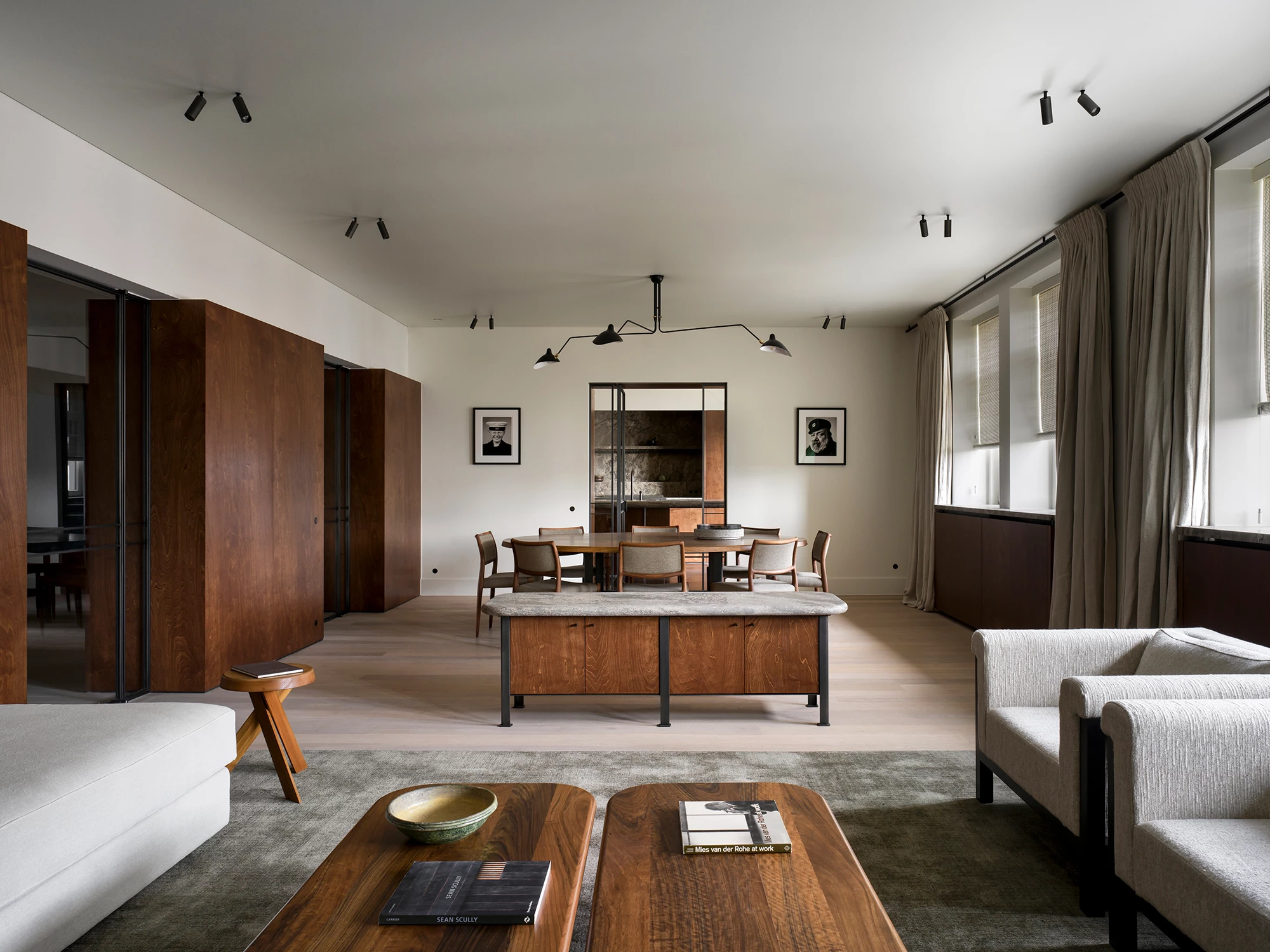
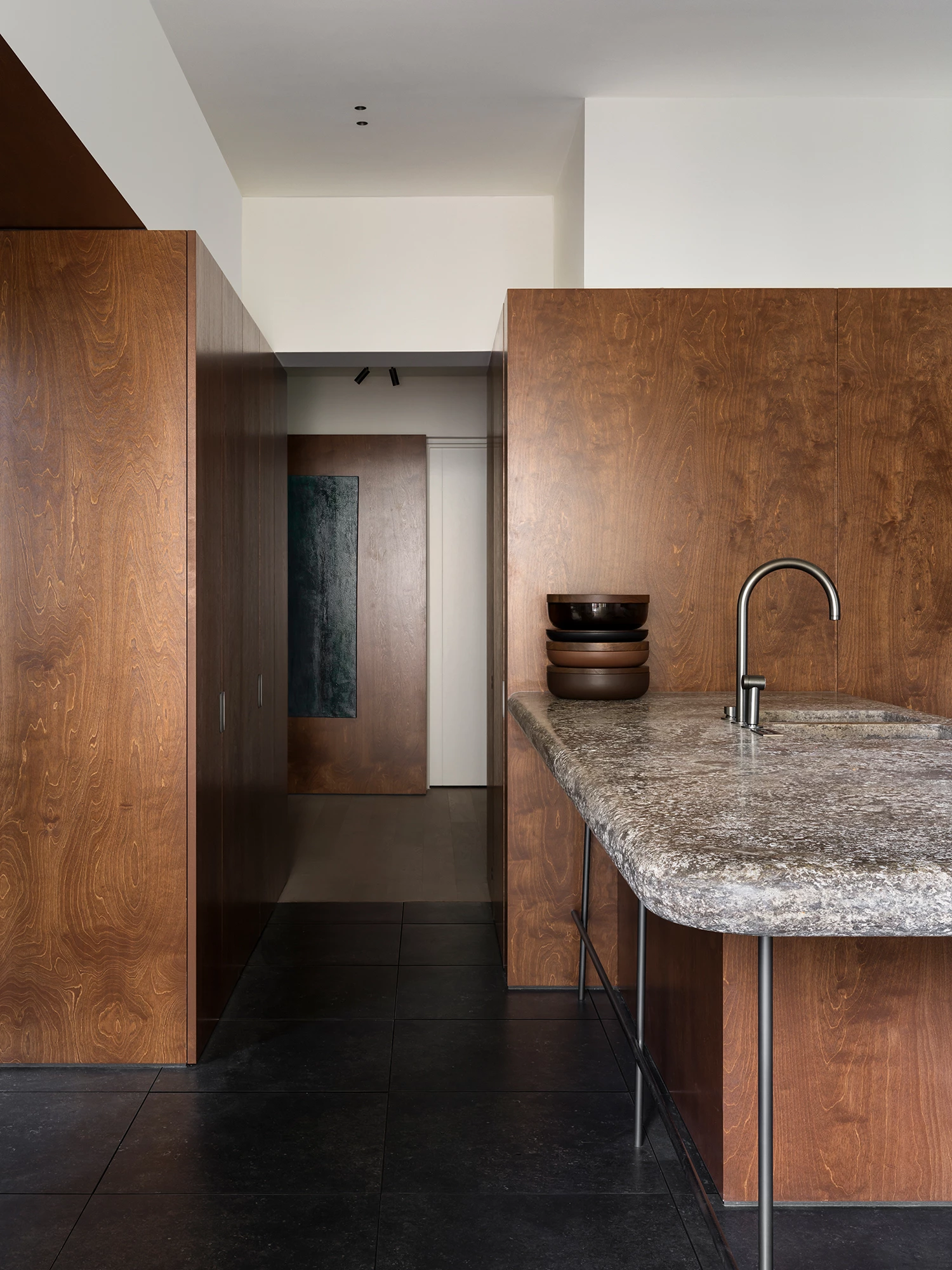
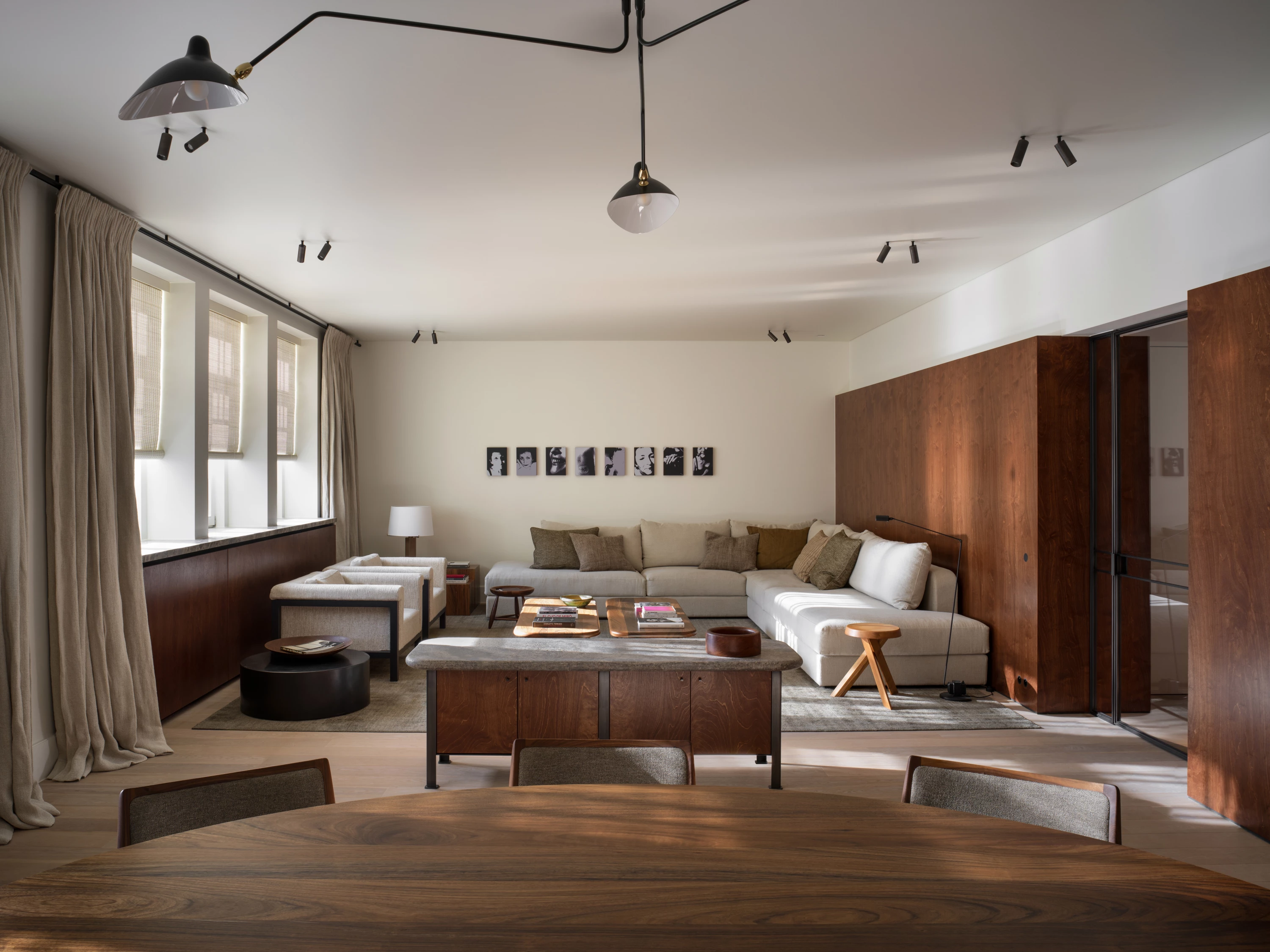
Decancq Vercruysse brought back the elegance of Art Deco into the interior with a modern approach. Tinted birch wood panels line the walls, setting a cocooning scenography that forges a feeling of comfort and intimacy. It creates a sense of flow through the apartment varying in its volume and function. Between the hallway and living room it frames sophisticated metal-framed doors, and in the kitchen it incorporates storage and complements the polished brown German stone surfaces.
“We worked closely with the wood supplier, testing and blending tints to achieve a colour that would reflect the woods typical of the Art Deco period,” says Emiel Vercruysse. “Birch wood is known for its patterned grain, and the colour and shiny finish we selected has completely transformed it into an elegant, expressive material.”
The scenographic panelling provides a sense of framing for life to play out, similarly to the interior and panelling seen at the Four Seasons restaurant in New York in Mies van der Rohe’s Seagram building, which was a favourite dining spot of the apartment’s owner and a key reference for the architects.
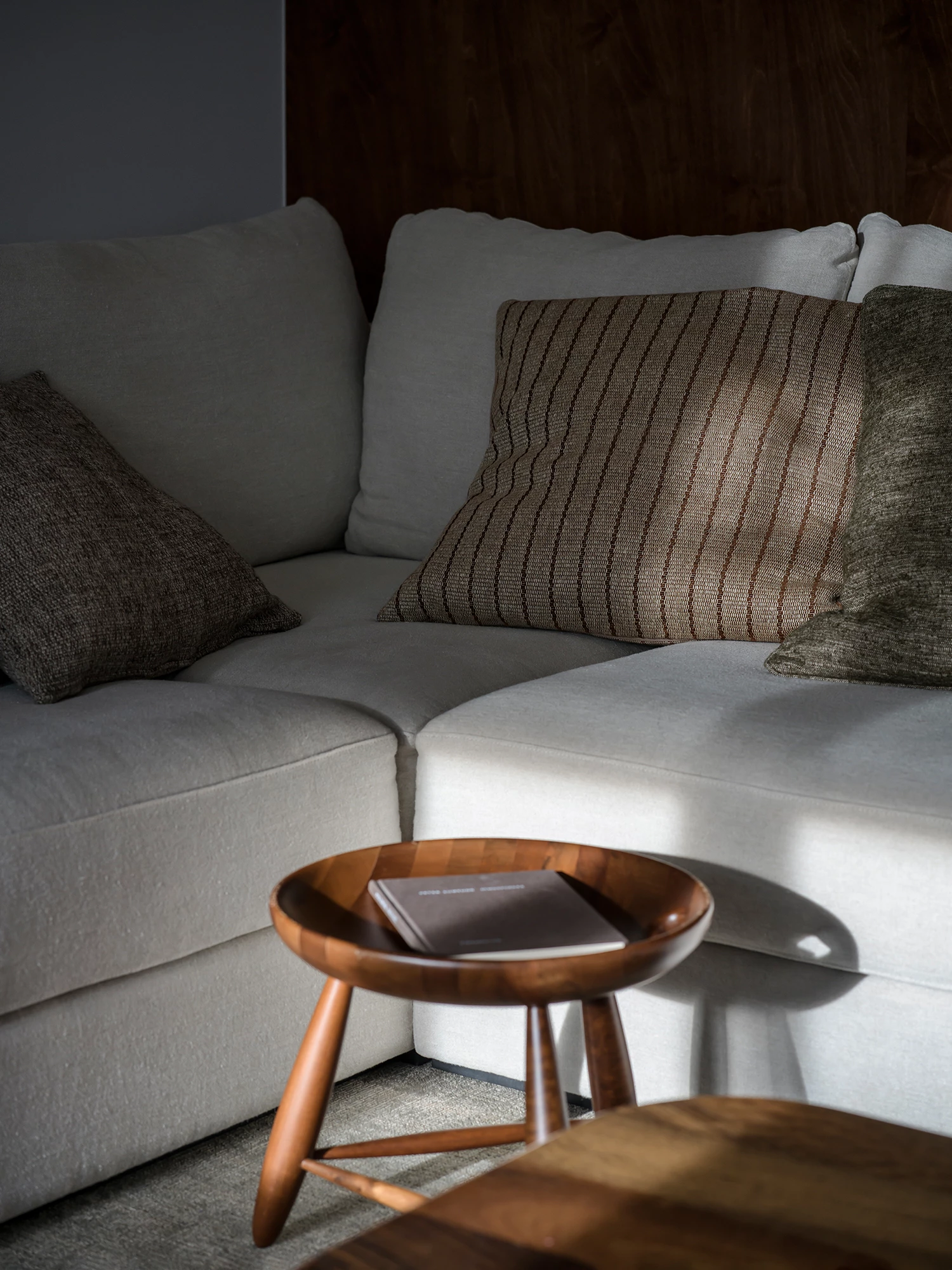
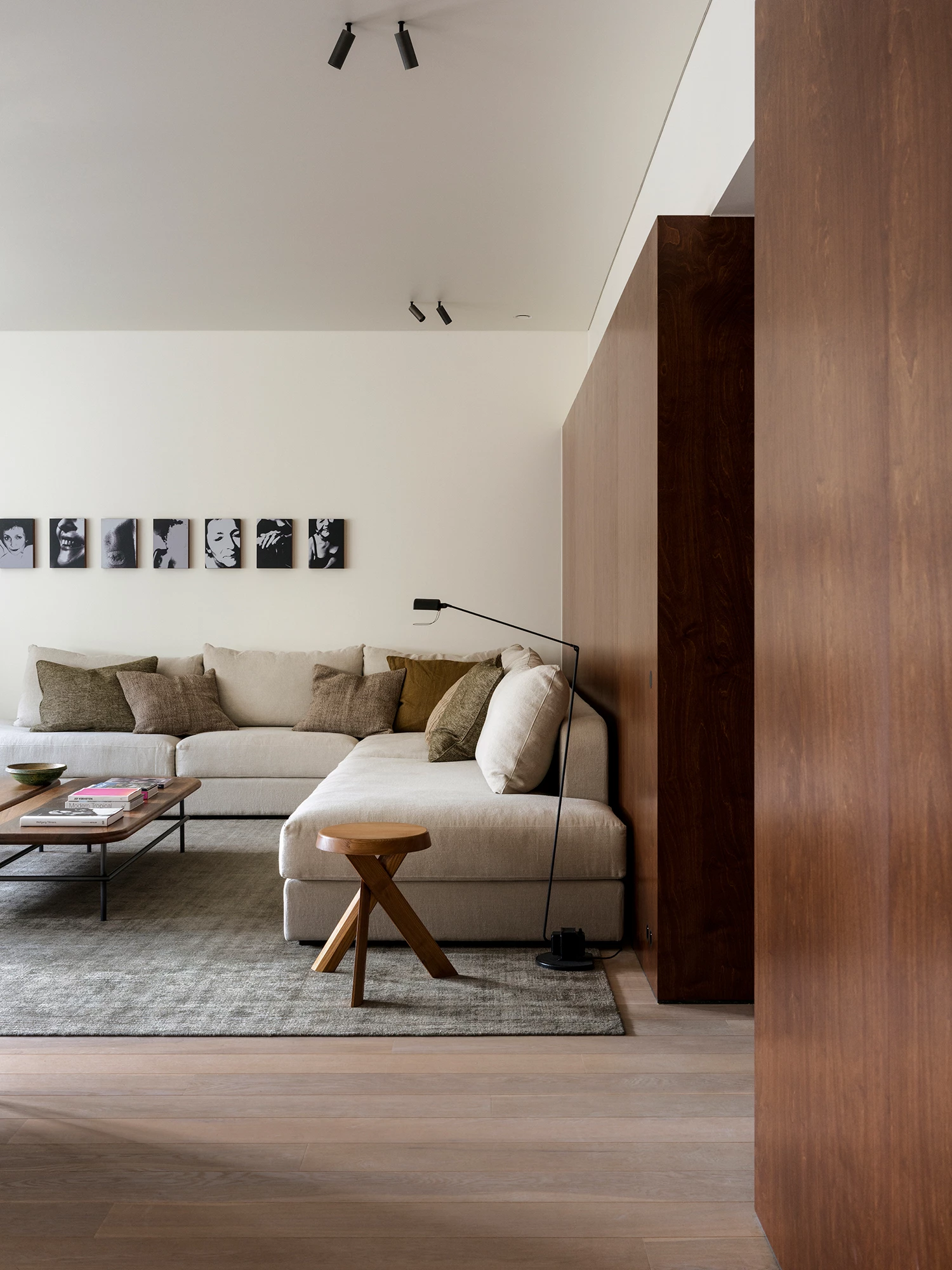
Metal was another recurring material, designed into custom furniture such as the refined console table in the hallway and the large circular dining table. Curated designs with presence by Belgian designer Jules Wabbes, include the standing lamps and black armchairs, and mid-century lamps are by French designer Serge Mouille. Round edges and soft upholstery balance the precise detailing of the metal, while images from a photographic reportage by Belgian photographer Stephan Vanfleteren capture venerable fisherman, nodding to his family home by the sea.
“We worked closely with the wood supplier, testing and blending tints to achieve a colour that would reflect the woods typical of the Art Deco period,” says Emiel Vercruysse. “Birch wood is known for its patterned grain, and the colour and shiny finish we selected has completely transformed it into an elegant, expressive material.”
The scenographic panelling provides a sense of framing for life to play out, similarly to the interior and panelling seen at the Four Seasons restaurant in New York in Mies van der Rohe’s Seagram building, which was a favourite dining spot of the apartment’s owner and a key reference for the architects.
Metal was another recurring material, designed into custom furniture such as the refined console table in the hallway and the large circular dining table. Curated designs with presence by Belgian designer Jules Wabbes, include the standing lamps and black armchairs, and mid-century lamps are by French designer Serge Mouille. Round edges and soft upholstery balance the precise detailing of the metal, while images from a photographic reportage by Belgian photographer Stephan Vanfleteren capture venerable fisherman, nodding to his family home by the sea.
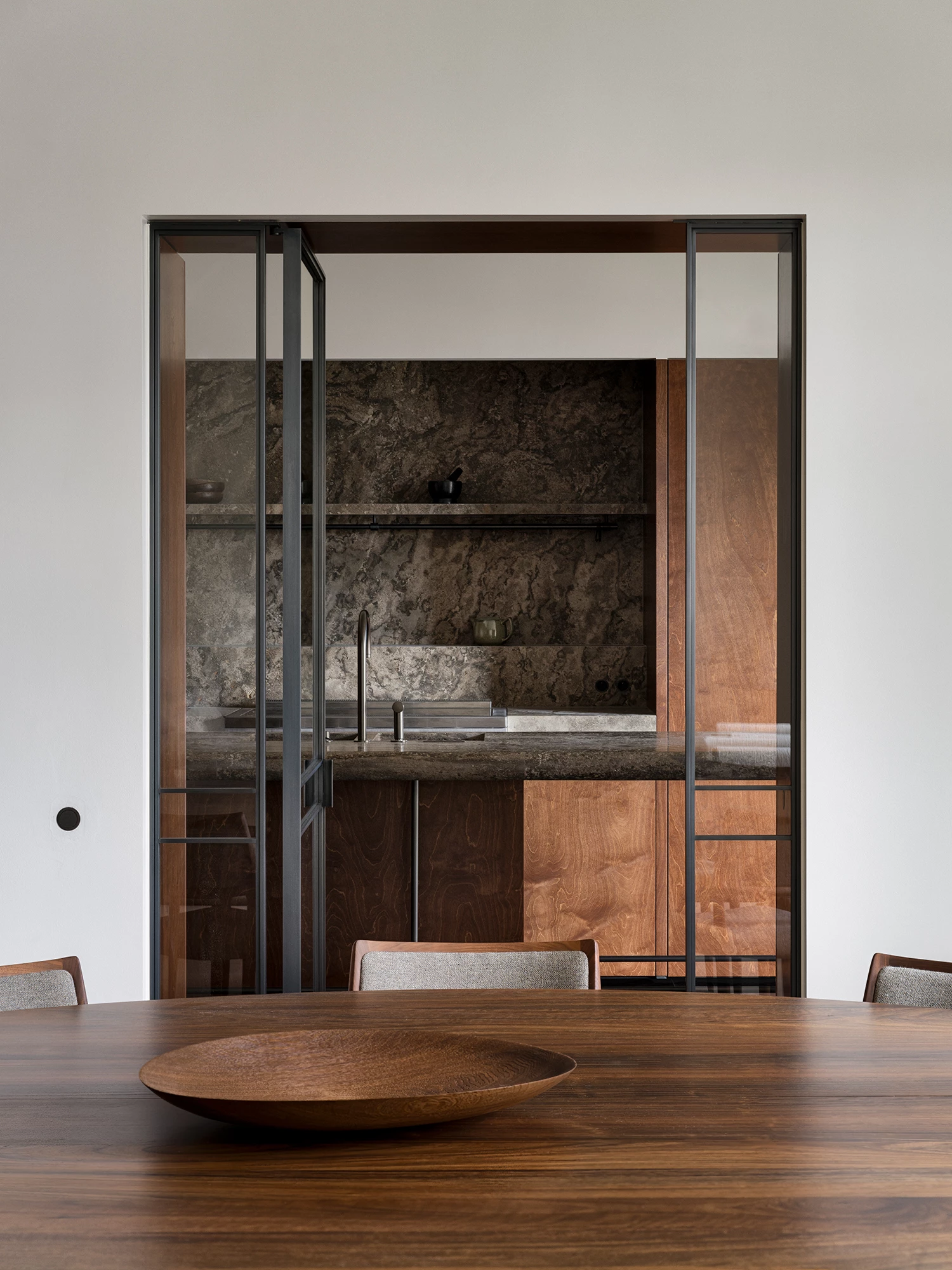
For Decancq Vercruysse, a carefully designed balancing act is a joyful process that results in a space for living authentically and intuitively. Psychologically, we all live in different spaces at once, and home is a place they each can find their peace, existing all at once and all together. When in balance, a space can be expressive of many qualities: minimalism, eclecticism, historicism, modernity, practicality – all importantly while still leaving room for the inevitable layers that continue to be added with time.
Photograpy Piet-Albert Goethals
« back to homepage